
Journal
Immunotherapy for high-risk HPV: what it is and what to expect
When high-risk HPV won't clear on its own, “watch and wait” wears you down. We look at it calmly and correctly: what targeted cellular immunotherapy is — and, importantly, what not to expect from it.
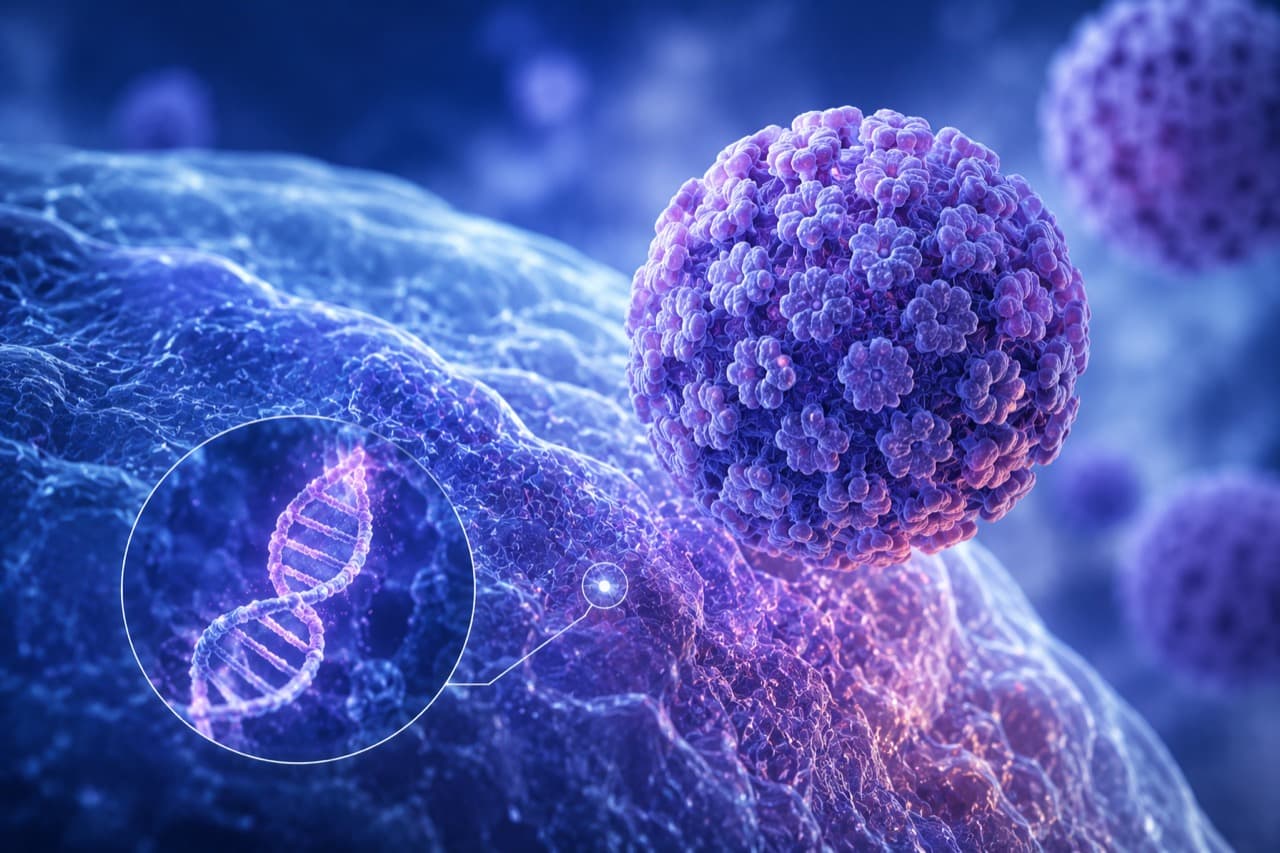
Persistent high-risk HPV infection is a reason not for panic but for a system. Yet years of “watch and wait” often wear you down more than the infection itself, and you want to understand whether there's anything beyond monitoring.
An important frame up front: this is an overview, not a medical recommendation. The method discussed does not replace screening and vaccination and is not a treatment for oncological disease. The physician determines the strategy.
Why high-risk HPV isn't ignored
High-risk types (16, 18 and others), when persistent, are a risk factor for precancerous changes of the cervix. The link between HPV and cervical cancer was established in the work of Harald zur Hausen (Nobel Prize 2008), so regular screening and vaccination remain the basis of prevention.
It's against this background that additional approaches are considered — as part of monitoring, not instead of it.
What HPV cellular immunotherapy is
The method uses the patient's own immune cells: they are “trained” by loading them with antigens of the HPV types identified in you (from typing), then returned to support a targeted immune response against infected cells.
It all starts with serious diagnostics — a “three-step” model: cytology and typing → colposcopy → biopsy if needed. The mechanism is covered on the method page.
What the method does NOT replace
This is the key point. The method does not replace HPV vaccination and regular cervical screening — they remain the basis of prevention. It is not a treatment for cancer and does not replace standard care for already-identified changes (for example, dysplasia).
The method does not guarantee clearance of the virus. Realistic expectations are discussed by the physician.
Who it's for by indication, and where it's available
The method may be considered by a physician for persistent high-risk infection — after diagnostics and typing. In most countries such a targeted cellular tool isn't available; in the Boao Lecheng zone it belongs to third-category medical technologies and is used in certified clinics, strictly confidentially.
It's a sensitive topic — support and interpreting here are confidential too, from the first message to the result.
Questions
Frequently asked questions
No. It is not a treatment for oncological disease and not a guarantee of its prevention. The physician determines the strategy after diagnostics.
No. The method doesn't replace HPV vaccination and regular cervical screening — they remain the basis of prevention.
Yes. Diagnostics, support and interpreting are handled confidentially; personal and medical data are used only for your request.
Read next
Useful on this topic
Discuss your situation with a coordinator
Describe your medical goal — we'll advise which documents are needed for a preliminary assessment and what the next steps could be.