
Journal
NK cells: what they are in plain words, and how immunity comes in
“Natural killers,” NK cells — it sounds fierce, but it's really part of your innate defence. We explain in plain words what they are and how NK therapy is arranged.
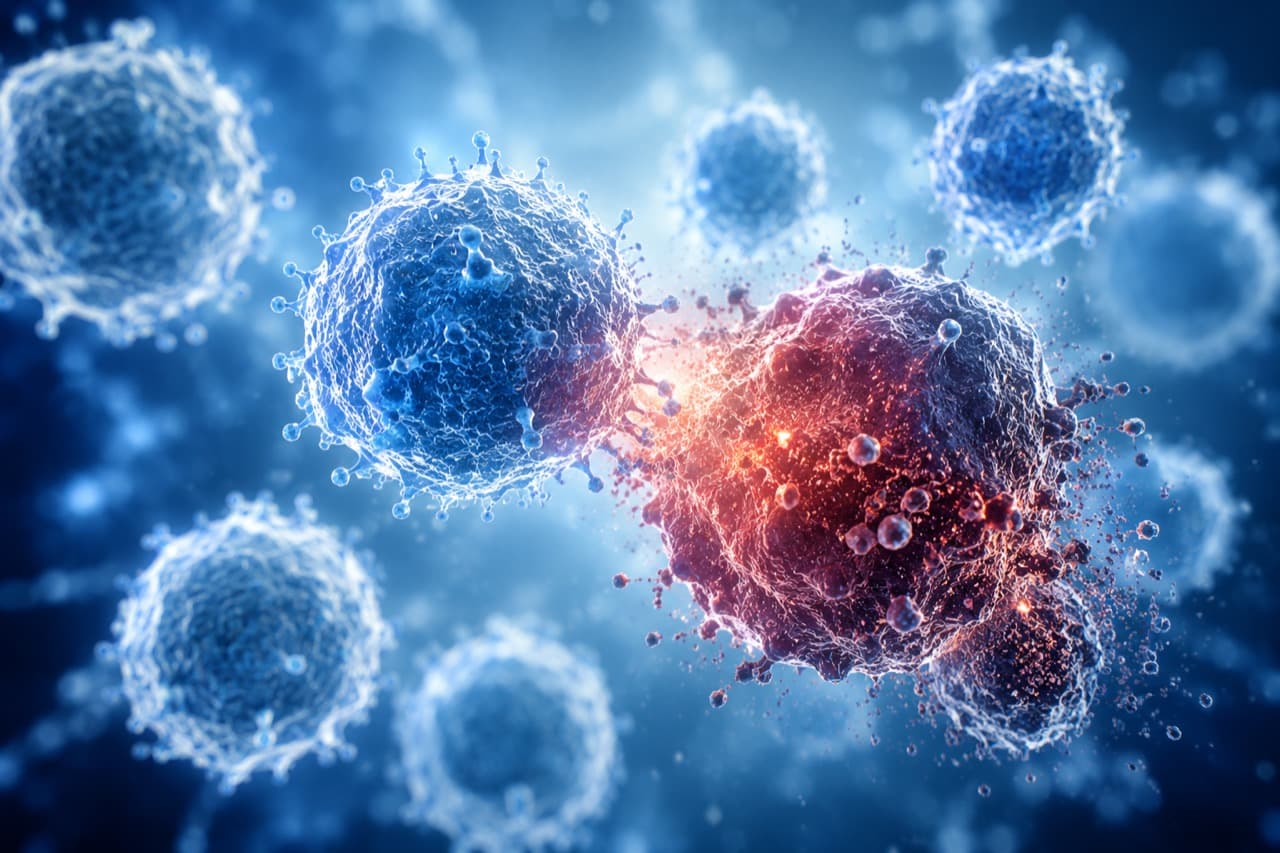
NK cells, “natural killers” — one of those terms that sound alarming but actually describe your own defence. Let's explain without jargon: who they are, what they do and how cell therapy comes in.
This is an overview for understanding, not a recommendation. Whether NK therapy fits your case is decided by a physician after diagnostics.
Who NK cells are
The immune system has a “rapid-response unit” — NK cells (natural killers). They patrol the body around the clock and are among the first to spot cells that have changed, been damaged or aged. Most immune cells need “setting up” for a specific threat — NK cells don't, they act at once.
This is part of innate immunity, discovered back in the 1970s and still actively studied.
How NK therapy works
The logic is simple. A little venous blood is taken; in a GMP-standard lab the patient's own NK cells are isolated, activated and expanded, then returned by infusion after 10–14 days. The cells stay yours throughout, so immunological risks are minimal.
The mechanism and standards are covered on the NK therapy page.
Who it may interest
The method is considered, in particular, by people who:
- Live under high load, catch colds often, feel low tone
- Are recovering after a viral load — under a physician's supervision
- Saw reduced NK-cell activity on an immunogram
- Are preparing the body for an anti-age or recovery programme
Why your own cells
Your own NK cells are used, not donor material — it's personal and reduces the risk of rejection. The method doesn't replace vaccination, treatment of infections or standard care; it supports natural immune surveillance — by indication.
It's worth starting with diagnostics: it shows whether there's a point, and what to expect.
Questions
Frequently asked questions
Your own cells are used, with multi-stage quality control. The most common reaction is fatigue on infusion day. Contraindications are assessed by the physician; the method doesn't guarantee a result.
Your own: from your venous blood (20–50 ml). They're isolated, activated and returned by infusion.
The response is individual. Support for immune function develops gradually; dynamics are assessed by wellbeing and tests, including the immunogram.
Read next
Useful on this topic
Discuss your situation with a coordinator
Describe your medical goal — we'll advise which documents are needed for a preliminary assessment and what the next steps could be.