Constant patrol
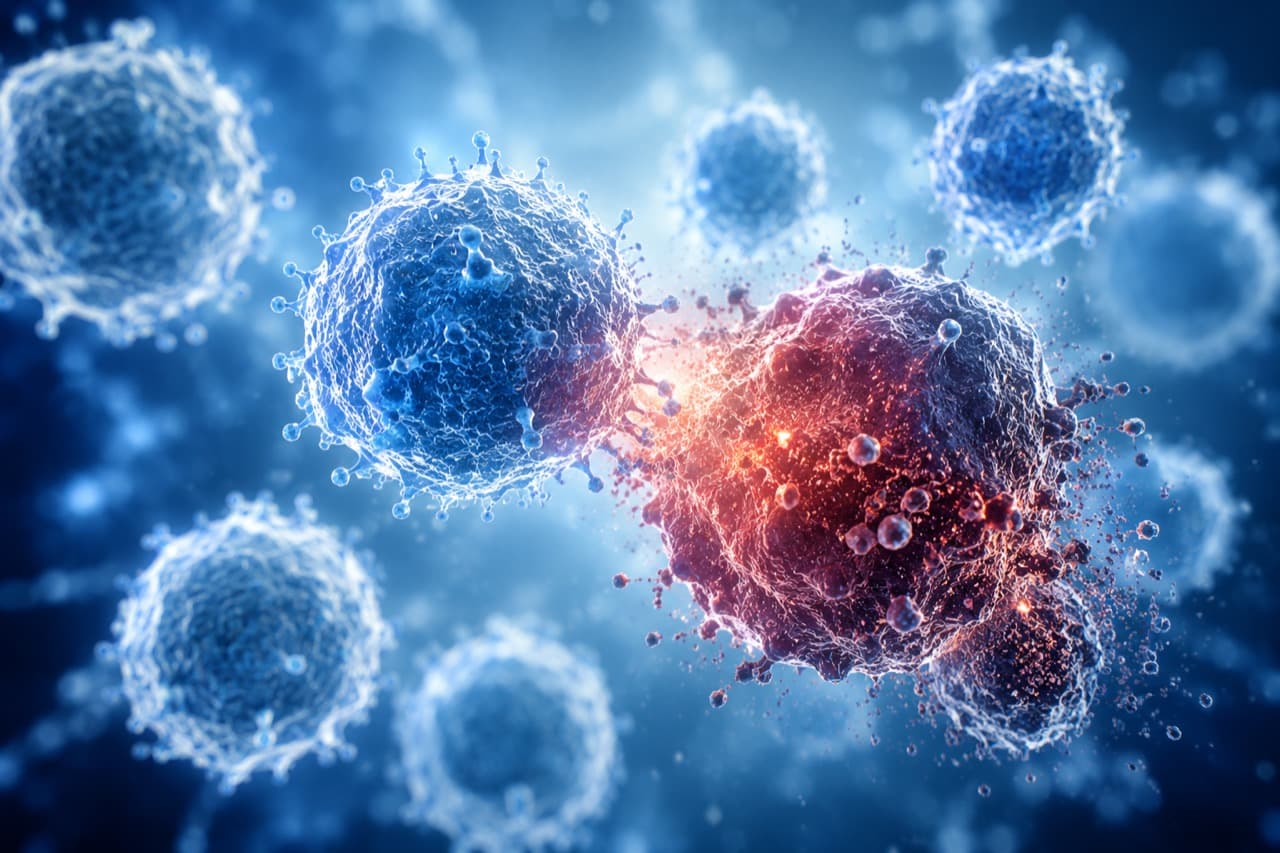
NK cells circulate through tissues and check cells for “self vs non-self” in real time, without prior set-up.
 MedBridgeBoao Lecheng · Hainan, China
Cellular medicine · immunity
NK cells are one of the first lines of your innate immune defence. In this programme they are isolated from your own blood, activated in the laboratory and returned by infusion. Because the cells are your own, immunological risks are minimal. Whether the therapy is appropriate in your case is decided by a physician after diagnostics.
About the method
Your immune system has a rapid-response unit — NK cells, the “natural killers.” They patrol the body around the clock and are among the first to flag cells that have changed, been damaged or aged. Most immune cells need “training” for a specific threat; NK cells don't — they act at once.
The procedure itself is simple. A small amount of venous blood is taken. In the lab your NK cells are isolated, activated and expanded, then returned by infusion after 10–14 days.
Throughout, the cells remain your own, so rejection and immune conflicts are practically absent. The programme is outpatient, without hospitalisation, in clinics of the Boao Lecheng cluster.
There is solid science behind the method. The role of immune surveillance and the clearance of senescent cells has been discussed in the literature, including in Nature (2016). The NK-expansion technology here is developed together with the University of Science and Technology of China (USTC); the team includes a member of the Chinese Academy of Engineering, and the protocol is patented and recognised at a national biomedical competition.
All of this speaks to the level of the approach, but does not promise you a specific result. Whether the therapy is needed, and what to expect, is determined by a physician after diagnostics.
How it works
NK cells circulate through tissues and check cells for “self vs non-self” in real time, without prior set-up.
Through special proteins (perforin and granzyme) they act precisely on damaged, aged and altered cells.
They find cells already “tagged” by antibodies and act precisely on them — a mechanism known as ADCC.
They release signalling molecules (cytokines) that wake up and engage other parts of the immune defence.
Scientific basis
Facts about the method's origin, standards and quality control — what trust is built on. This is not a promise of a result: a physician decides whether it's right for you.
NK (“natural killers”) are innate-immune cells discovered in the 1970s; one of the actively studied areas of modern immunology.
Cells are isolated and prepared in the hospital's cell-engineering centre under GMP protocols, with control of viability and activity.
The centre's research team includes specialists in cellular and gene technologies, among them graduates of USTC.
Status and evidence
Where other clinics print success rates, we print the regulatory status, the level of evidence and what that means for your expectations. Whether the method is used in your case is decided by the hospital's physician.
Immune-cell technologies are used in Boao Lecheng under a permit from the zone's regulator for a named hospital and named indications — translational use, with an ethics committee and outcome registration. That is a permit to use, not a drug registration.
No NK-cell product is registered as a medicine in any country. The only approved cell immunotherapies are CAR-T products — for lymphomas and leukaemias, in haemato-oncology centres.
Phase 1–2 studies: tolerability is good and serious adverse events are rare. An anti-tumour effect of NK cells as a stand-alone treatment for solid tumours has not been demonstrated; the method is studied as an adjunct. There are no randomised trials of benefit in healthy people.
Honest expectations: support of immune function, assessed by tests before and after the course — not treatment of a disease. If anyone promises to “destroy cancer cells” or quotes success rates, that is neither our language nor science.
The team
Examples of the specialist physicians we work with in this area. The cluster holds several hospitals — the clinic and the specialist are matched to your case. Physicians prescribe and deliver the treatment; MedBridge coordinates the route.
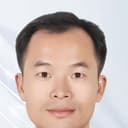 Luo ZhihuaInternal medicine · cellular technologies
A graduate of the University of Science and Technology of China (USTC). Internal medicine, 10+ years in practice; experience with stem cells, NK and CIK. Named “Best Doctor” of the Boao Lecheng zone (2019).
Who it's for
Most people who consider this method recognise themselves in situations like these. It's not a prompt for self-treatment — whether it fits your case is decided by a physician after consultation and diagnostics.
Travel, workload and chronic lack of sleep — and your “battery” hasn't recharged to full in a while.
You don't wait until something forces your hand: you work from your test data and act ahead of time.
An immunogram showed reduced NK-cell activity and you want to take it seriously.
You want to regain tone and support immunity — under a physician's supervision.
You're planning an anti-age or recovery programme that logically starts with immunity.
The moment
Most people hear about cellular immunotherapy years late — once it finally reaches their country. You already know the place where NK therapy is lawfully available today. The people who fly here are the ones who prefer to act early. Whether the method is right for you, a physician will say honestly after a check-up — and even a “you don't need it” comes with a complete picture of your health.
Why patients consider it
These are reasons for interest in the method, not a promise of outcome: the physician sets the final decision and realistic expectations.
Your own NK cells are used, not donor material: personal, with minimal immunological risk.
Boao Lecheng is a regulated State-Council innovation zone with access to cellular technologies not yet available in most countries.
A patented protocol (CD56+ purity over 90%), a scientific base at the level of USTC, publications in Nature, GMP/ISO standards.
A personal coordinator and interpreter; outpatient, confidential, 24/7 support.
Indications
May be considered by a physician, in particular for the states below. This is not a prompt for self-treatment — a specialist decides after diagnostics.
Cost
Approx. ¥198,000 per course (≈ $27,500); the zone's registered prices start at ¥49,800 per infusion
This isn't an off-the-shelf drug: your NK cells are isolated, activated and expanded personally for you — about two weeks of GMP-laboratory work.
Every batch is checked for purity (CD56+ over 90%), viability and cell activity.
The figure reflects the whole path: diagnostics before the course, infusion under medical supervision and a follow-up check at 2–4 weeks.
A coordinator and interpreter accompany you at every stage — from paperwork to the post-course check.
The exact cost is determined only after diagnostics — the programme is tailored individually, by indication. Payment is made directly to the cluster's clinic, by official invoice. For context: cells into the knee here cost ¥36,000 (≈ $5,000) per injection at the zone's registered price, against $35,000–50,000 in Western European clinics; a systemic infusion here is from ¥50,000 (≈ $6,950), against $20,000–22,000 in Japan and Switzerland. All prices → · Zone registry → · Country comparison →
Safety
The approach is built around patient safety and verifiable quality.
Process
Blood tests, inflammation markers, viral panels, immunogram.
20–50 ml of the patient's venous blood.
10–14 days; control of purity, viability and cell activity.
About 60 minutes, without hospitalisation.
Check-up in 2–4 weeks.
A course is usually 1–2 procedures, 2–4 weeks apart. Your own cells are used, which reduces rejection risk. Response and dynamics are individual; the physician discusses realistic expectations at the consultation.
Plus Chinese medicine
A cell technology works on the tissue; pain, sleep, recovery and routine between courses are the work of Traditional Chinese Medicine. In the cluster the two can be combined in one plan on one trip — in mainland China, only here. The combination is prescribed by the physician after the work-up.
A 7-day TCM course is from ¥4,100 in procedures. How they are combined → · TCM programmes →
Outcomes
Support for immune function develops gradually; this is not a “cold pill for today.”
Dynamics are assessed by wellbeing and follow-up tests, including the immunogram — before and after the course.
Support of natural immune surveillance and tone — not a replacement for vaccination, treatment of infections or standard care.
Response is individual; the method does not guarantee a specific result. The physician discusses realistic expectations at consultation.
Safety
Openness about safety is part of a responsible approach.
Your venous blood is used, not donor material — immunological risks are minimal.
Multi-stage checks of purity (CD56+ over 90%), viability and activity; serum- and feeder-free medium.
The most common reaction is fatigue or a mild temperature rise on infusion day, usually brief. Individual tolerability is assessed by the physician.
Contraindications usually considered include active infection, uncontrolled oncological and autoimmune processes, pregnancy and others. The physician decides after diagnostics.
Safety
NK therapy here is far from a “book-an-injection” procedure. Your cells are prepared in the hospital's cell-engineering centre — to GMP standards, in clean rooms, with multi-stage testing of every batch: purity (CD56+ over 90%), viability, activity and sterility. Behind the technology is a scientific base at the level of the University of Science and Technology of China (USTC) and a patented protocol. And you are not left alone after the course: a personal coordinator stays in touch, a follow-up at 2–4 weeks, and telemedicine back home if needed.
Every programme begins with a consultation and an accurate diagnosis (check-up). Treatment does not start without assessing indications and contraindications.
Questions
Yes. Every programme begins with a consultation and diagnostics (check-up). No therapy starts without an accurate diagnosis and assessment of contraindications — that is the basis of safety.
From the patient's own venous blood (20–50 ml). The cells are isolated, activated and expanded in the lab, then returned by infusion.
Your own cells are used, with multi-stage quality control. The most common reaction is fatigue on infusion day. Contraindications are assessed by the physician; the method does not guarantee a result.
Usually 1–2 procedures, 2–4 weeks apart. The exact schedule is set by the physician after diagnostics.
The active part of the visit is usually a few days: consultation, diagnostics, blood draw and infusion. Part of the preparation and follow-up can be remote; exact timing is agreed in advance.
Be sure to mention this at the consultation: the physician takes comorbidities and medication into account when assessing indications and contraindications.
The programme and the number of procedures. See the Pricing page for a guide; the exact estimate is formed after diagnostics and paid directly to the clinic.
Tell us your situation and medical goal — we'll advise which documents help prepare a preliminary review and what the next steps could be.