Observation
The physician assesses general appearance, skin and — characteristically for TCM — the tongue: its shape, colour and coating as a reflection of internal processes.
 MedBridgeBoao Lecheng · Hainan, China
Area · Traditional Chinese Medicine
A thousand-year medical tradition where it originated and where it remains a full part of state healthcare. MedBridge helps arrange access to licensed TCM physicians with decades of practice — with diagnosis, a programme and support in your language. Methods are used by indication; decisions are made by physicians.
About the area
Traditional Chinese Medicine (TCM) is a holistic medical system more than two thousand years old. It looks at the whole person — not an isolated symptom, but overall state, way of life and inner balance. The aim is not to mute a sign, but to help the body return to steady equilibrium. Hence its breadth: from pain and sleep to digestion, recovery and the changes that come with age.
One distinction matters most: in China, TCM is not folk medicine or esoterica. It is an official, licensed branch of healthcare — taught at state medical universities, practised in public hospitals alongside Western medicine, and prescribed by qualified physicians. Outside China you mostly meet a simplified, fragmented version; here you reach the original.
That is why people travel to China for authentic Chinese medicine: the schools and continuity have survived here (often family lineages of physicians in the third or fourth generation), the volume of practice is immense, herbal raw materials are of high quality — and, importantly, the traditional approach can be combined with modern instrumental diagnostics.
MedBridge arranges that access: we match a specialist TCM physician to your goal, organise in-person diagnosis and the programme, and take on interpreting, paperwork and coordination. We do not diagnose online — the relevance, composition and length of methods are determined by the physician after consultation.
Programmes and prices
A single session settles nothing — a course does. Three programmes assembled from the cluster hospital's tariffs; the TCM physician adjusts the composition to your case at the first consultation.
Pulse diagnosis, 6 acupuncture sessions, 6 tuina sessions with manipulation, 3 moxibustion or cupping treatments, an individual herbal formula.
Disc herniation and protrusions, neck and lower-back pain, osteoarthritis, morning stiffness.
Pulse diagnosis, 6 acupuncture sessions, 4 head massages, 3 herbal baths with foot massage, 3 moxibustion treatments, a herbal decoction.
Insomnia, burnout, tension headaches, fatigue with normal test results.
Pulse diagnosis, 10 acupuncture sessions, 10 tuina sessions, 5 moxibustion or gua sha treatments, 2 wellness spa massages.
For those coming to Hainan on holiday who want to go home with a result, not just a tan.
A 4-day check-up (¥17,800 with hotel), a cell programme by indication — for example an MSC injection into the knee at the zone's registered price, ¥36,000 — and the 'Back, neck and joints' TCM course from ¥4,100. A worked example for the knee; the cellular part for your diagnosis follows the registry.
Joints, back, recovery: the technology works on the tissue, TCM on pain and movement. The combination is prescribed by the physician after the work-up.
Prices are the hospital's tariffs for the procedures, paid at its cashier. Accommodation (the hospital hotel or Sanya), transfers and an interpreter are costed for your format and sent as one figure before you book. For context: an acupuncture session in Europe or the US costs $75–150; here it is ¥200 (≈ $28). Full price list →
Arrange a TCM courseMethods
The classic arsenal of Chinese medicine. The specific combination for your goal is determined by the physician after diagnosis — methods are used by indication.
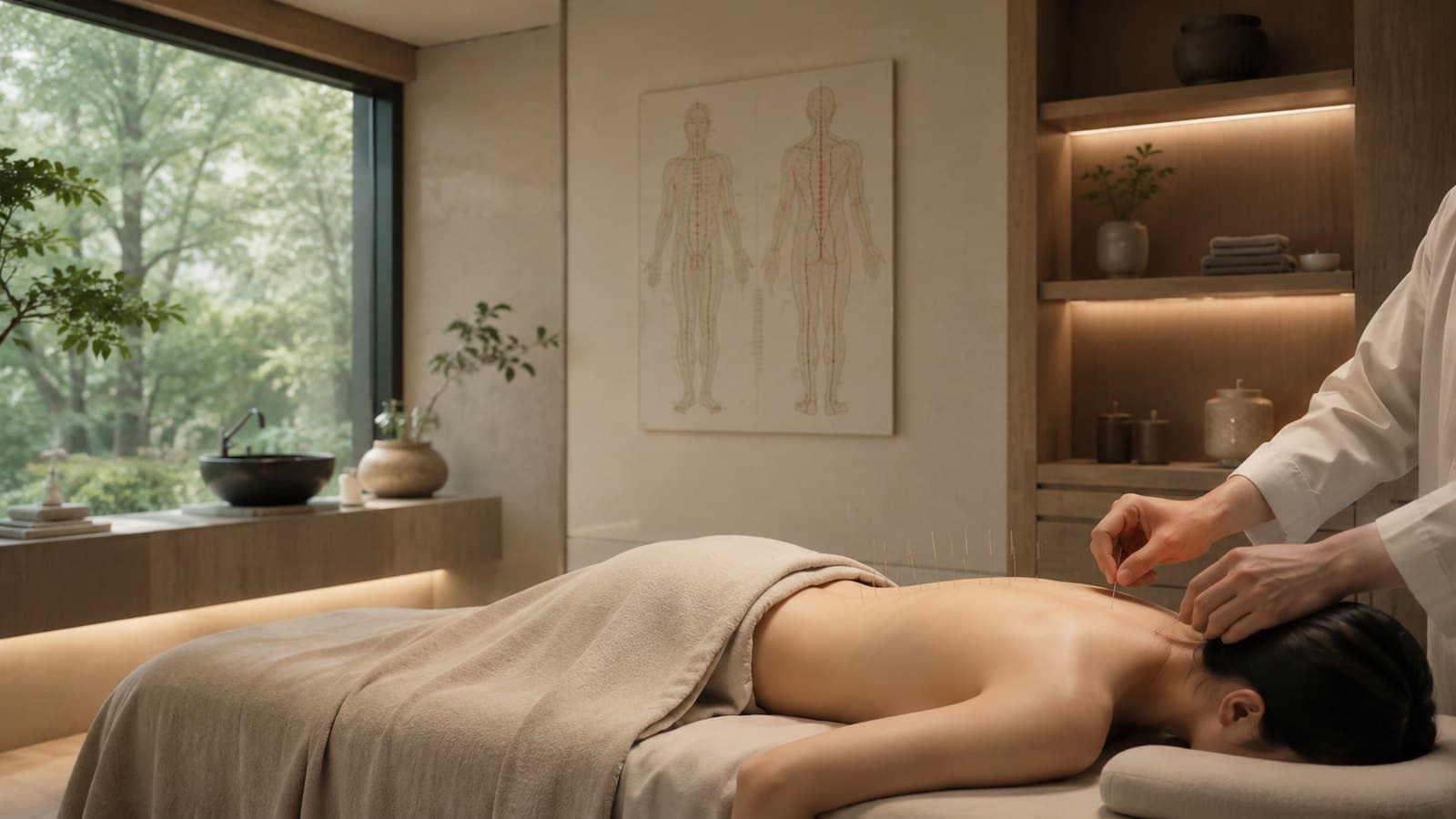
The finest sterile single-use needles are placed into biologically active points. Several schools exist: body acupuncture, scalp acupuncture, auricular (ear) acupuncture, and wrist-and-ankle techniques. One of the most studied areas is work with pain, musculoskeletal tension and recovery.
Gentle, deep warming of points with smouldering mugwort (moxa) — on its own or combined with needles. Patients describe a penetrating warmth and relaxation. Used in states where, traditionally, it is important to 'warm' and support.
Vacuum cups create local suction on the skin — a way to work through muscular tension and improve local circulation in an area. Often used for the back and large muscle groups, including for active people and athletes.
A gentle scraping massage with a special tool over oil, along muscles and meridians. It addresses muscular tension, tissue tone and a sense of 'stagnation'; a cosmetic facial gua sha also exists.
A full manual discipline of TCM, not 'just massage': kneading, point pressure along meridians, gentle traction and joint work. It is often combined with acupuncture within a single programme.
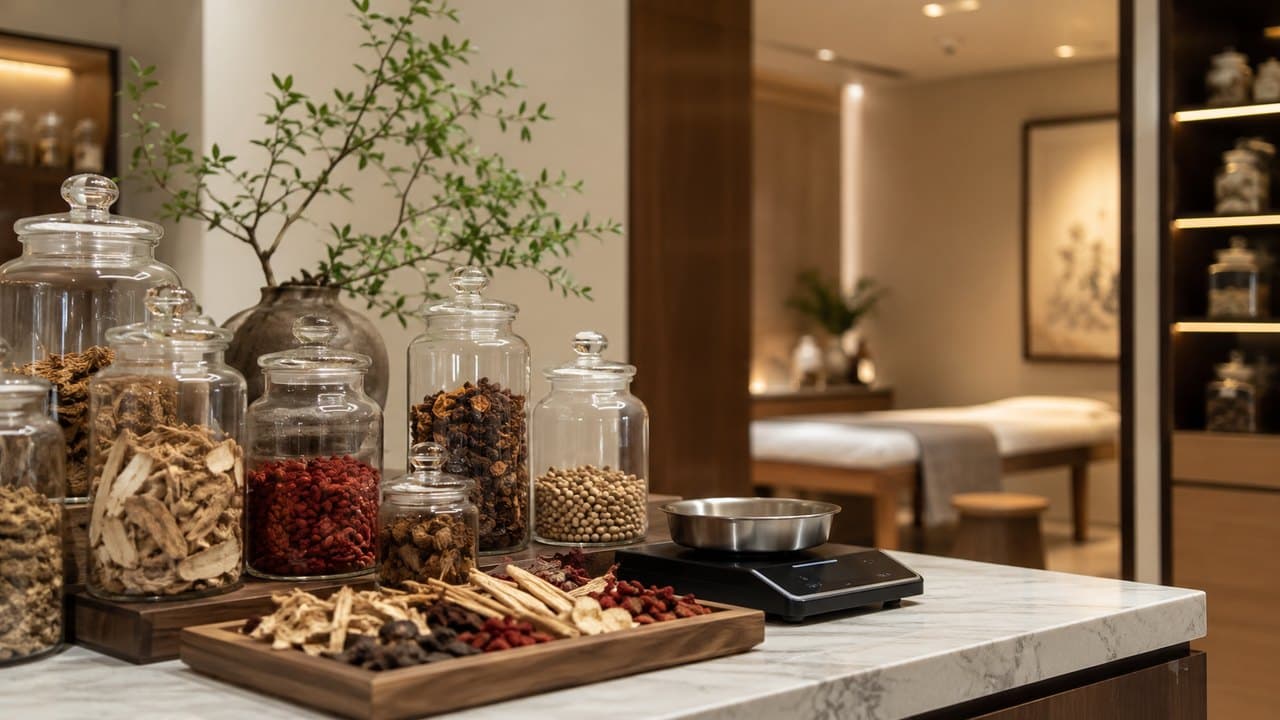
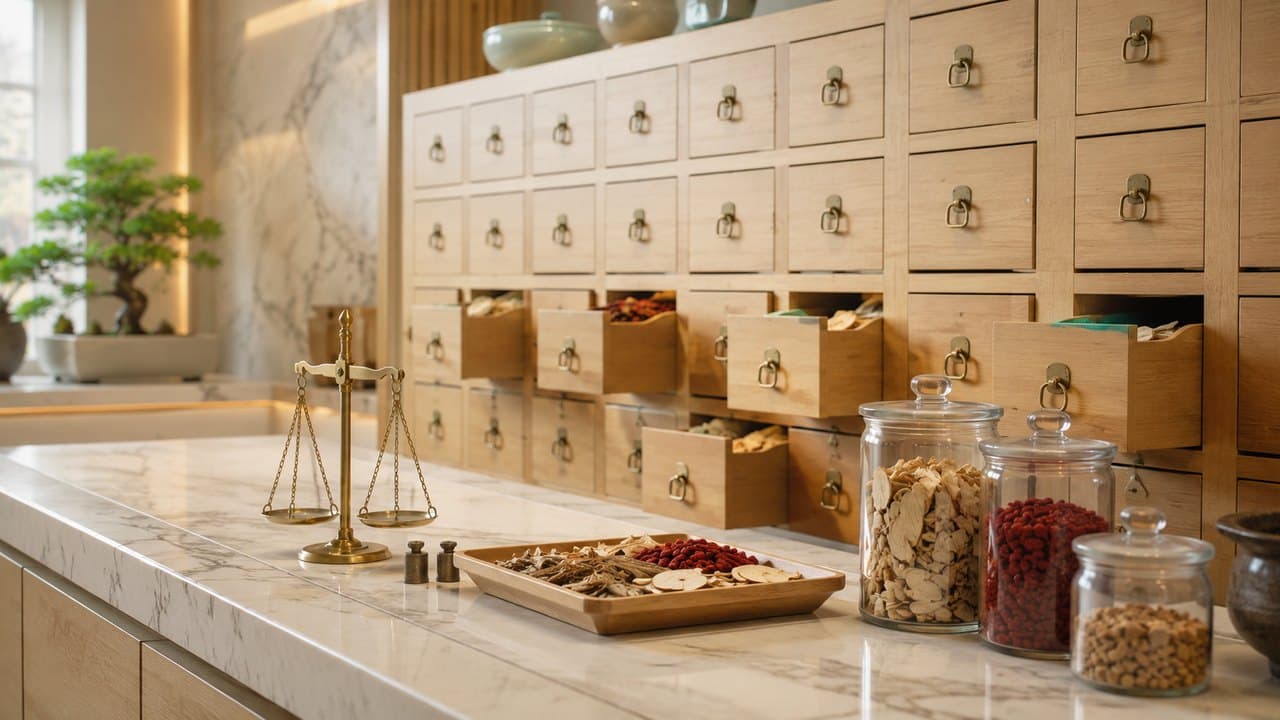
Individual botanical formulas the physician composes for a specific person, not from a template — as decoctions, granules or ready forms, from certified raw materials. The formula is revised as the state changes.
Specialised techniques
These techniques are used by experienced physicians strictly by indication and only after in-person diagnosis. We list them for completeness — the need is determined by the specialist.
A fine technique at the meeting point of acupuncture and minor manipulation, for local areas of tension. Performed strictly by indication and only by experienced physicians, after in-person diagnosis.
Micro-injections of preparations into biologically active points — combining a point-specific effect with the delivery of an active substance. Prescribed by a physician, by indication.
A thin absorbable thread placed into points for gentle, extended stimulation between visits. A method used by indication, for situations where a prolonged effect matters.
Special access
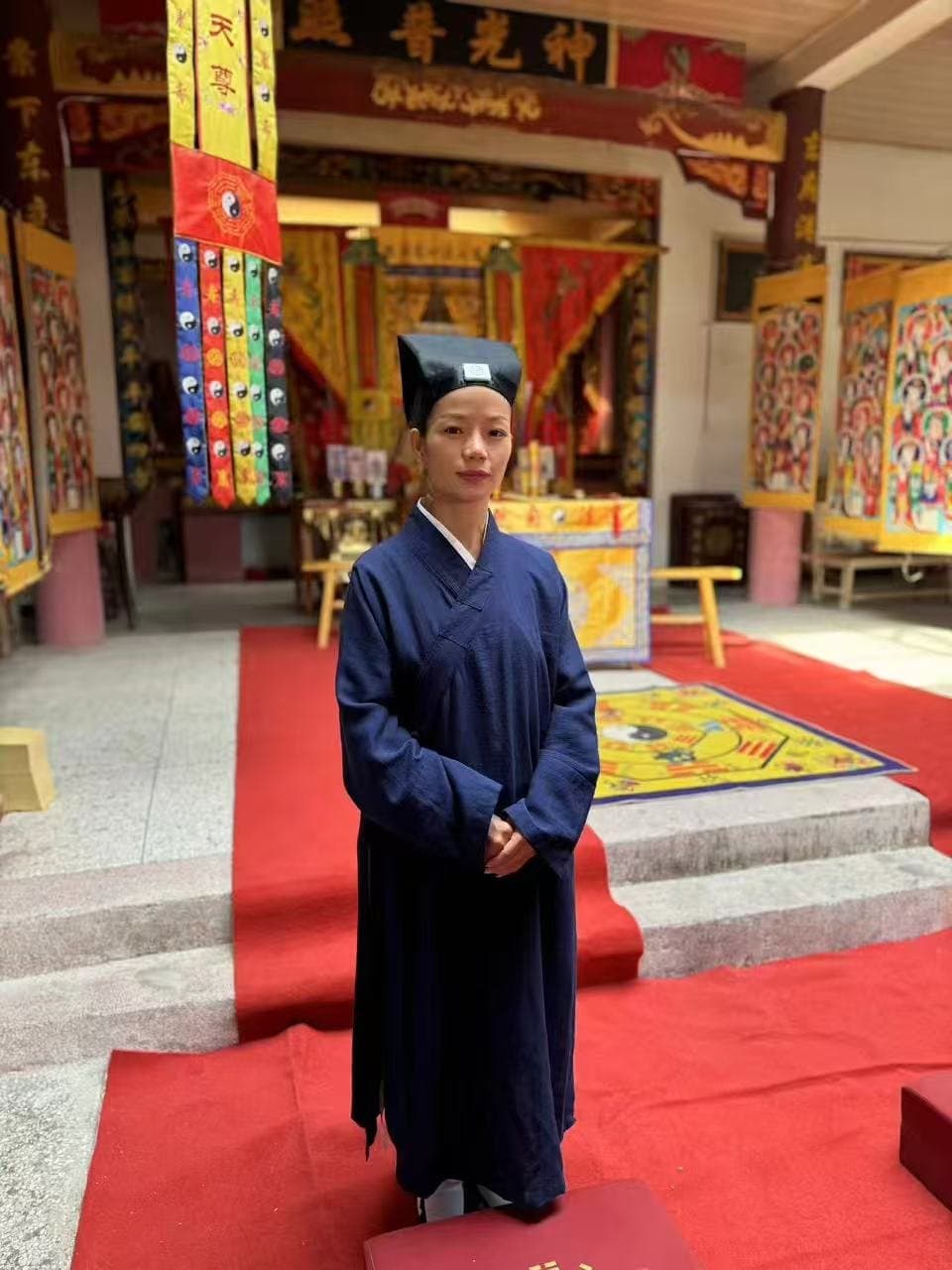
A rare format even for China: consultations with a bearer of a living Taoist transmission — the Shangqing (Maoshan) school in the 80th generation — and third-generation successor of the academic school of the famed physician Li Ke. Classical formulas, pulse diagnosis, restorative practices — with an interpreter, by prior arrangement.
Diagnosis
Diagnosis in TCM rests on the 'four pillars'. This is why two people with similar complaints may be prescribed something entirely different — the approach is always individual.
The physician assesses general appearance, skin and — characteristically for TCM — the tongue: its shape, colour and coating as a reflection of internal processes.
A thorough conversation about lifestyle, sleep, diet, energy and how you feel through the day — the picture is built from many details, not a single complaint.
The physician attends to voice, breathing and other natural signs — part of the traditional 'four pillars' method of diagnosis.
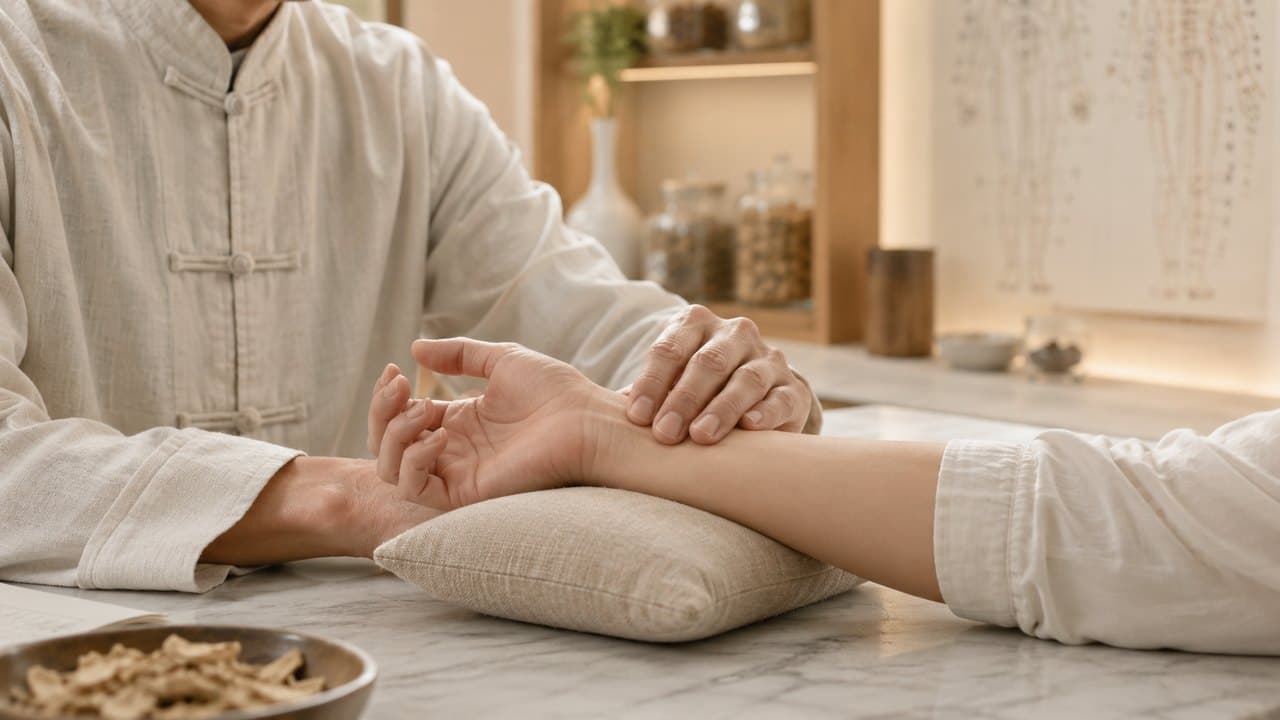
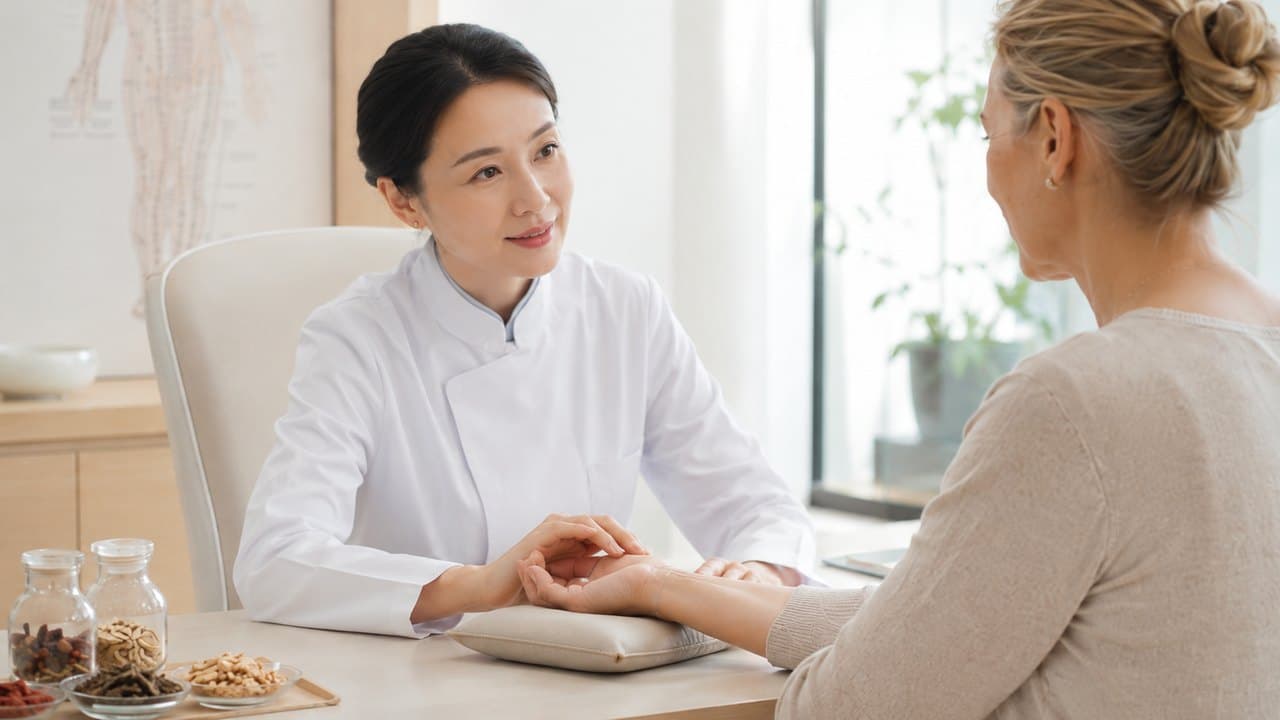
Reading the pulse at the wrists in several positions — the signature skill of a TCM physician, which takes years to master. From this an individual 'constitution' is formed, to which methods are matched.
What people come with
Below are the situations people most often bring to Traditional Chinese Medicine. If you recognise yourself in even one, that is already a reason to talk to a coordinator. The programme and realistic expectations are determined by the physician: this is not a promise of cure, nor a replacement for necessary treatment.
Chronic tension, 'knots', the toll of desk work. The classic — and best-studied — territory of acupuncture and tuina.
Discomfort in the knees and shoulders, morning stiffness. Gentle methods that place no extra burden on the body.
One of the most common reasons people seek acupuncture worldwide.
Difficulty falling asleep, shallow sleep, waking up tired. Sleep is a traditional strength of TCM.
When 'nothing hurts, but the energy is gone'. TCM looks at the state as a whole — and works with exactly that.
Heaviness, irregularity, a sensitive stomach. An area where herbal medicine has been used for centuries.
The cycle, transitional periods, overall state — discreetly, individually and without haste.
Tone, energy and the quality of life people don't always find easy to talk about — here it is an ordinary medical topic.
Supportive programmes during rehabilitation — in agreement with your treating physician.
The sense that the body is losing ground — the traditional territory of TCM's strengthening programmes.
Support within comprehensive programmes — alongside nutrition, movement and lifestyle.
Energy, skin, a sense of lightness — what TCM describes as restoring balance.
Recognition
Why one can speak about TCM calmly and with confidence.
The World Health Organization included a traditional-medicine chapter in the International Classification of Diseases — recognition of the approach at a global level.
Acupuncture and moxibustion are inscribed on UNESCO's list of the intangible cultural heritage of humanity.
TCM universities, public hospitals, physician licensing and research institutes — a branch of medicine, not 'folk practice'.
Clinics in the US, Europe and Japan use acupuncture. But the fullest school and practice are where it all began.
The moment
Many people spend years meaning to try real Chinese medicine — not from books or in translation, but where it is thousands of years old and led by physicians with decades of practice. This is precisely the case where access to the original is one flight away, with a coordinator in your language beside you the whole time. People usually put this off until "someday". Now "someday" has a precise address.
Why people consider it
These are reasons for interest in the area, not a promise of outcome: realistic expectations and prescriptions are determined by a physician.
Authentic Chinese medicine where it originated and where it remains part of the state healthcare system.
Needles, warmth, hands, herbs — an approach that relies on natural mechanisms and is usually well tolerated.
The programme is built around your 'constitution' and goal, not a universal protocol.
Licensed specialists with decades of practice and formal schools behind them — not self-taught practitioners.
TCM complements modern medicine well and does not ask you to give up your existing treatment.
Integration
The cluster's key advantage: you do not choose one instead of the other. A cell technology and TCM cover different ground, and here one team combines them.
They work on the tissue — joint, vessels, metabolism — by indication and under a technology registered with the zone. A targeted intervention with preparation and follow-up.
It works on everything around it: pain and mobility, sleep, stress, digestion, recovery between courses. Needles, tuina, herbal medicine, daily routine.
On its own, each approach leaves half the task open. In one plan the cellular part restores the tissue and TCM helps the body make use of it — no promises or percentages, at the physician's discretion.
The Boao Lecheng pilot zone is the only regime in mainland China where cell technologies are used lawfully on a paid basis, and Chinese medicine here is part of hospital care — so the two can be combined in one plan on one trip — in mainland China, only here. In Europe and the US, TCM usually sits outside hospitals and cell therapies outside any registry.
In practice: four days of work-up, then a cell programme by indication — for example an MSC injection into the knee at the zone's registered price, ¥36,000 — and a seven-day TCM course from ¥4,100: acupuncture and tuina relieve pain and restore movement while the tissue recovers, and herbal medicine and routine keep working for months after you return. Whether to combine them is decided by the hospital's physician after the work-up. TCM programmes → · Cellular medicine →
Safety
The approach is built around patient safety and verifiable quality.
Process
You describe your goal and how you feel and, if available, send your records. We advise on what to consider.
We match a specialist TCM physician to your situation — with the right specialisation and experience.
In-person diagnosis by the TCM method; the physician composes an individual programme of methods and, if appropriate, herbal medicine.
The course runs on a convenient schedule, with an interpreter and coordinator beside you. The composition is adjusted as things progress.
A coordinator in your language is with you at every step: you understand what is happening and why, and all documents and communication are in a language you understand.
Cost
An acupuncture session is ¥200 (≈ $28), tuina ¥380, pulse diagnosis ¥50; a 7-day course from ¥3,300 in procedures, 14 days from ¥7,700. Herbal medicine is priced by the composition of the formula. Ready programmes →
Acupuncture, tuina, moxibustion and cupping, specialised techniques — combined for your goal.
Single sessions or a course of several visits — determined by the physician for your situation.
Individual botanical formulas, where the physician finds them appropriate.
The initial consultation and, if needed, modern instrumental diagnostics.
The exact cost is set only after consultation — the programme is tailored individually, by indication. Payment is made directly to the clinic, by official invoice. The full TCM price list — over 60 procedures →
Go deeper
The subject of treatment deserves careful study. We have written detailed pieces on how TCM works with specific situations and how it all unfolds in practice.
Needles, tuina and warmth: how the programme is built for the most common problem — and when diagnostics come first.
Acupuncture's best-studied field: what a course looks like and what the science says.
How TCM returns the body's own ability to sleep — and which expectations are realistic.
The pulse, the tongue, the 'off-topic' questions: how diagnosis goes and what to bring.
What a line of transmission is, why bearers are few — and how a consultation with Master Zhi Ning works.
Describe your situation and goal — we'll match a specialist TCM physician, tell you which documents help, and propose the next step. We do not diagnose online.
Questions
Some TCM methods — for example acupuncture for certain kinds of pain and nausea — have scientific support and are recognised by a number of healthcare systems and the WHO. That said, TCM is regarded as a complementary, supportive approach, not a replacement for necessary treatment. Its relevance in your case is determined by a physician.
The needles are very fine — thinner than an ordinary injection. Most patients feel a light tingling, warmth or a sense of 'heaviness' at the point, but not pain. The procedure takes place in a calm setting.
Needles are sterile and single-use. Herbal medicine is composed from certified raw materials. Please tell the physician about any chronic conditions and all medicines you take — this affects what is prescribed.
It depends on the programme: some goals are addressed in single sessions, others in a course of several visits. The physician will discuss a realistic schedule and duration with you at the consultation.
Often yes — TCM is used as a complement to your main treatment. But this should only be done with your treating physician's knowledge. We will help pass on your records so the TCM physician sees the full picture.
Appointments run with an interpreter; all communication and support are in your language. You always understand what the physician is doing and why.
The source. Here you have qualified physicians with decades of practice, a state system, continuity of schools, and the option to combine the traditional approach with the cluster's modern diagnostics.
No. Online, only a preliminary review and matching a direction are possible. Diagnosis and prescriptions are made in person — determined by the physician after diagnostics.
Tell us what's troubling you and what you'd like to achieve — we'll suggest realistic options and arrange a visit to a specialist TCM physician.