
Journal
Sleep: how Chinese medicine restores it without heavy solutions
Sleep is a traditional strength of TCM: it is approached not with a 'switch' but by restoring the whole background — tension, stress, digestion. We unpack the approach and realistic expectations.
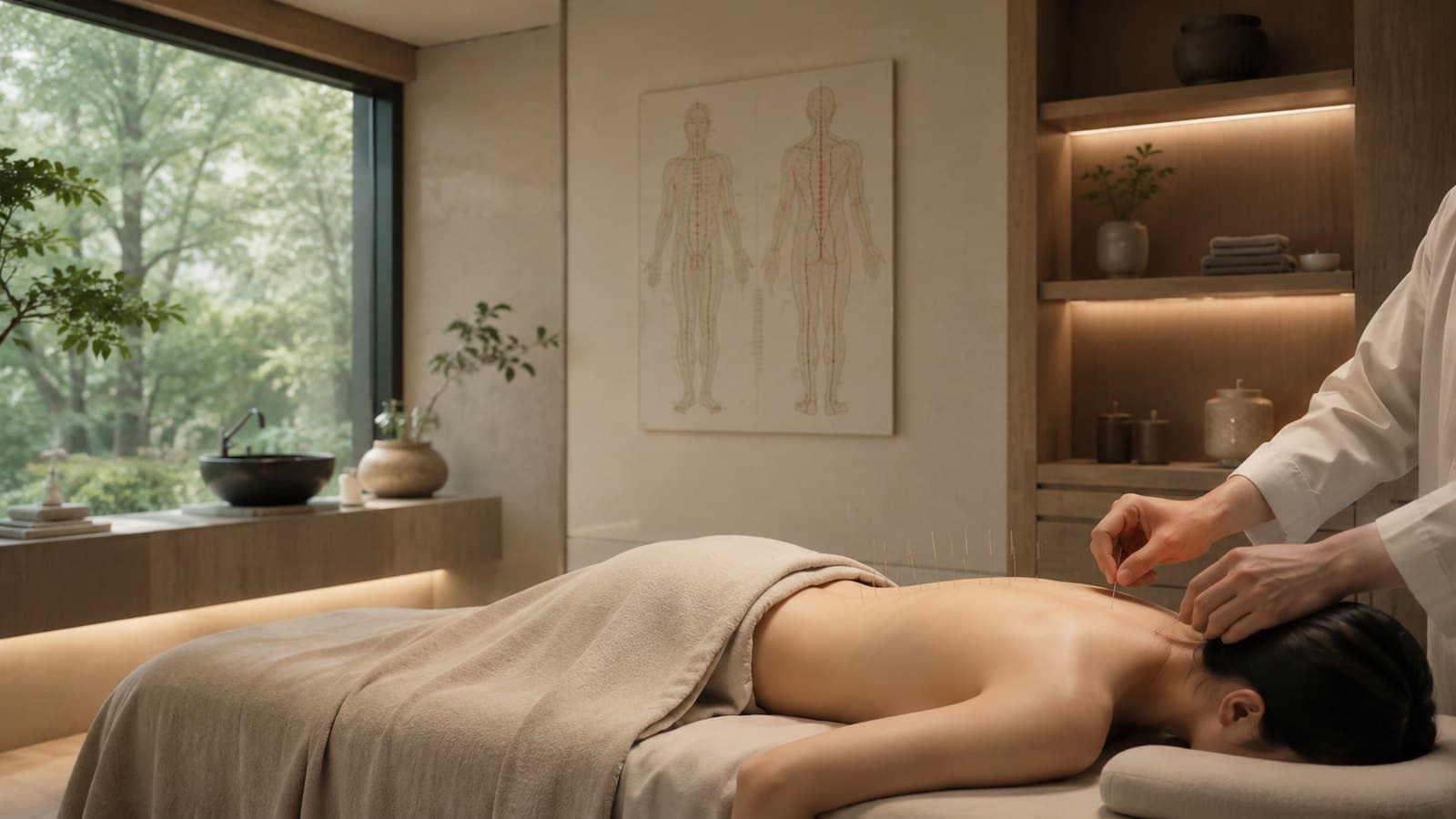
'It takes me an hour to fall asleep', 'I wake at four', 'I sleep but wake unrested' — in a TCM physician's room these are three different stories, and they are worked with differently. That is the essence of the approach: not to switch a person off for the night, but to return the body's own ability to sleep.
Educational material. The area as a whole — the TCM page; the methods a sleep programme is built from — needles, tuina and herbal medicine.
Why sleep is home ground for TCM
Poor sleep rarely comes alone: beside it are stress, a contracted neck, circling thoughts, irregular meals, evening screens. TCM by its nature works precisely with such a tangle — the state as a whole, not a single symptom.
The sessions themselves train relaxation: 30–40 minutes of deep stillness with needles is an experience many people with insomnia barely know. The body 'remembers' how to switch off.
What the programme is built from
The base is acupuncture on an individual point scheme. To it the physician adds what your picture calls for: tuina of the neck-and-collar zone (a frequent culprit of the 'mind that won't switch off'), gentle herbal support, routine recommendations.
TCM's sleep formulas are not 'herbal sleeping pills' but background support: composed for your constitution and adjusted along the way. Be sure to tell the physician about every medicine you take.
- Needles + the stillness of the session — 'relaxation training'
- Tuina — releasing the tension that blocks switching off
- Herbal medicine — gentle support, by indication
- Routine and habits — part of the programme, not an appendix
Realistic expectations
Sleep is cumulative: assess dynamics over weeks, not by the first night. A good sign through the course is not only 'falling asleep faster' but 'calmer days', 'less on edge'.
If insomnia is severe and long-standing, the honest route starts with diagnostics — excluding causes that need separate treatment. The cluster makes this convenient: the check-up plus the TCM programme in one trip.
Questions
Frequently asked questions
Yes — but the physician must know the medicine and dose. Do not stop anything yourself: if the scheme can ever be revised, that is done only with your treating physician.
Dynamics are usually assessed after several weeks of the course. The physician will suggest a simple sleep diary — it shows real movement rather than one night's impressions.
Age is not a contraindication: programmes are adapted in intensity. The relevance of the methods in your case is determined at diagnosis.
Read next
Useful on this topic
Discuss your situation with a coordinator
Describe your medical goal — we'll advise which documents are needed for a preliminary assessment and what the next steps could be.