Points and meridians
The physician selects a combination of points for your goal — from diagnostic findings, not a universal template. The map of points is the result of two thousand years of observation.
 MedBridgeBoao Lecheng · Hainan, China
TCM · Method 1
The finest sterile needles placed into biologically active points — the method that became the face of TCM worldwide. In China it is practised at a level hard to find elsewhere: a distinct medical specialty with university training and decades of daily practice. Used by indication; decisions are made by physicians.
About the method
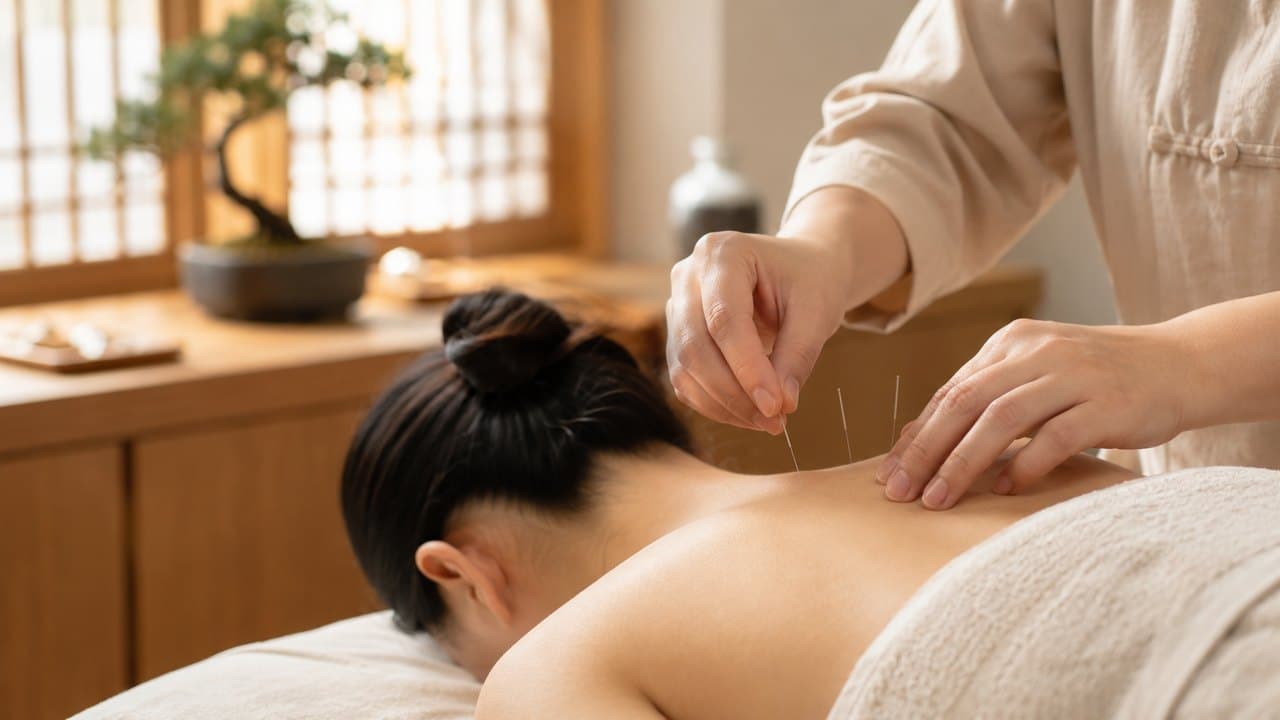
Acupuncture works with the body through hundreds of points arranged along defined lines (meridians). The needle is hair-thin — many times finer than the one used for injections. For most patients it feels like light tingling or warmth, and the session itself like deep rest.
In the language of modern physiology, acupuncture engages nerve endings, muscular trigger zones, local circulation and the body's own pain-relief mechanisms (endorphins). In the language of the Chinese tradition, it restores the free movement of energy along the meridians. The two descriptions do not contradict each other — they look at one process from different sides.
In China acupuncture is not a spa treatment but a separate medical specialty: it is taught at medical universities, and mastery of points and techniques is refined over decades of clinical work. This is why people travel to the source — the difference between 'took a course once' and 'forty years at the needle' is felt from the first session.
There are several schools and techniques: body acupuncture, scalp acupuncture, auricular (ear) acupuncture, wrist-and-ankle techniques, the 'floating needle'. Which technique and which points you need is decided by the physician after diagnosis — in TCM there are no identical prescriptions.
How it works
The physician selects a combination of points for your goal — from diagnostic findings, not a universal template. The map of points is the result of two thousand years of observation.
The needle gently stimulates nerve endings and muscular zones — the body answers: tone, circulation and its own pain-relief mechanisms shift.
Many points coincide with muscular trigger zones — those tender knots. The needle helps them release more deeply than hands alone.
The effect of sessions adds up: the body 'remembers' the new state. That is why acupuncture is almost always prescribed as a course.
Process
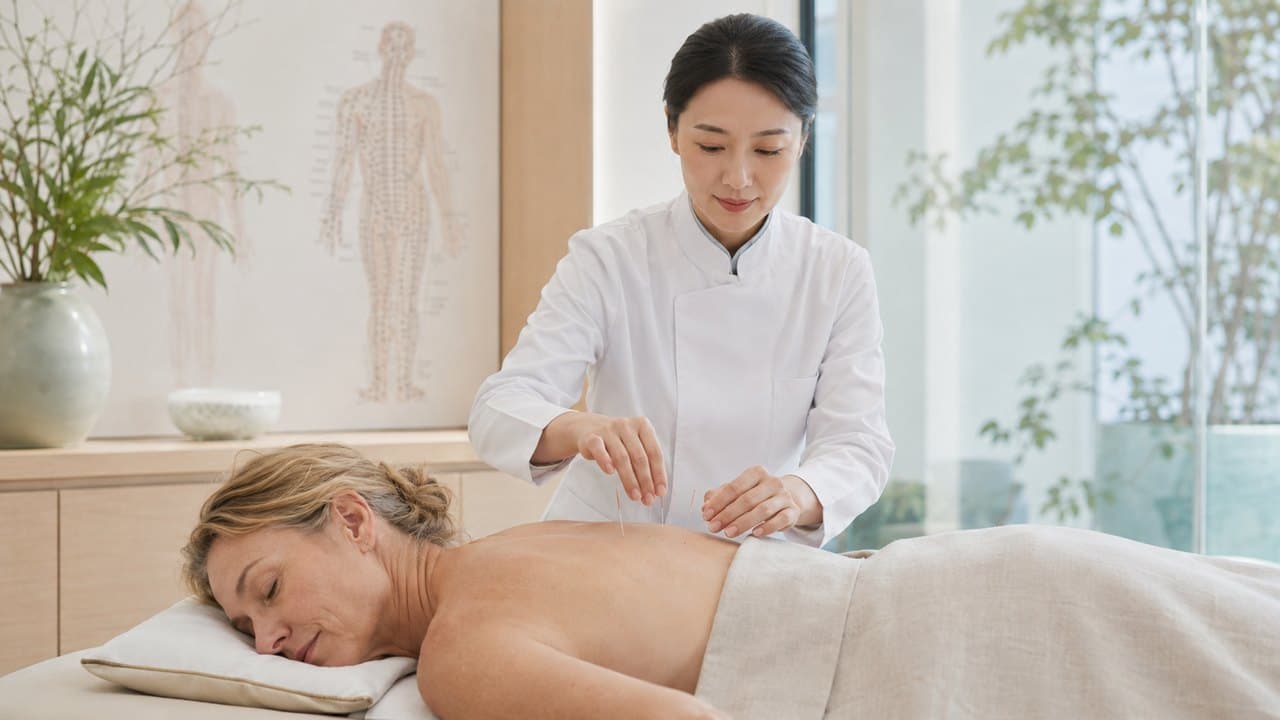
The physician examines you, reads the pulse, looks at the tongue and asks in detail — then selects points and technique for your picture.
You lie comfortably; the physician places from a few to a couple of dozen needles quickly and almost imperceptibly. Only sterile single-use needles are used.
The needles stay in place while you rest. Most patients describe deep relaxation; many fall asleep.
The needles are removed; the physician comments on your response and adjusts the course — the number and rhythm of sessions.
After a session most people feel relaxed and light; some feel sleepy the first evening. Responses are individual: the physician tracks yours from session to session and adjusts the scheme. A course usually takes several sessions; you will be given a realistic plan after diagnosis.
What people come with
These are the situations in which the method is most often considered — not a promise of cure. Its relevance in your case is determined by the physician after diagnosis.
The best-studied area of acupuncture worldwide.
One of the most common reasons people seek acupuncture.
Knots, trigger points, the toll of desk work and overload.
The deep rest of sessions helps restore the quality of recovery.
As a supportive method within recovery programmes — in agreement with your treating physician.
Discomfort and stiffness — gentle work with no added burden on the body.
Status
Facts about origin, recognition and standards — what trust in the method is built on.
Acupuncture is used in clinics across the US, Europe and Japan; traditional medicine is included in the WHO's ICD-11 classification.
Thousands of studies have been published on acupuncture; its work with pain and nausea is studied best.
In China acupuncture is taught at state medical universities — a licensed medical profession.
Acupuncture and moxibustion are inscribed on UNESCO's list of the intangible cultural heritage of humanity.
Safety
Openness about safety is part of a responsible approach.
Combinations
Acupuncture is often combined with tuina, moxibustion and herbal medicine within one programme — the methods reinforce each other. If you are coming for a check-up or a cluster programme, sessions fit neatly into the schedule: we synchronise the timetable for you.
The full picture of the area — methods, diagnosis, recognition and trip logistics — is on the Traditional Chinese Medicine page.
Describe your situation and goal — we'll match a specialist TCM physician, tell you which documents help, and propose the next step. We do not diagnose online.
Questions
The needles are many times finer than injection needles. You may feel light tingling at placement, then warmth or a sense of 'heaviness' at the point. Most patients relax deeply during the session; many fall asleep.
It depends on the goal: some things shift within the first sessions, others need a course. The physician will give you a realistic plan after diagnosis — and adjust it to your response.
The depth of the school and the volume of practice. In China it is a separate medical specialty; senior physicians bring decades of daily needle work and a complete diagnostic system that guides the choice of points.
Yes, as with any method: clotting disorders, certain skin conditions at the point sites, specific situations in pregnancy. That is why the method is prescribed by a physician after diagnosis.
Yes. Only sterile single-use needles are used, and the packaging is opened in front of you. This is the standard of licensed clinics.
Usually yes — acupuncture complements baseline treatment well. Send us your records: the physician will account for the full picture and the medicines you take.
Tell us what's troubling you and what you'd like to achieve — we'll suggest realistic options and arrange a visit to a specialist TCM physician.