
Flagship · Cellular and regenerative medicine
Cell therapy and stem cells in China: what it is and who it may suit
One of the most promising fields of modern medicine — and one of the most misunderstood. Below we explain it rigorously and on the merits: what it is, how it fundamentally differs from conventional treatment, which directions exist and when it is considered. Without simplifications that distort the substance, and without promises. Programmes are used by indication; decisions are made by physicians.
- Most often — your own cells
- Outpatient, no surgery
- Some technologies registered in the US, EU, Japan
- Cellular programmes — under zone-regulator permits
- By indication — physicians decide
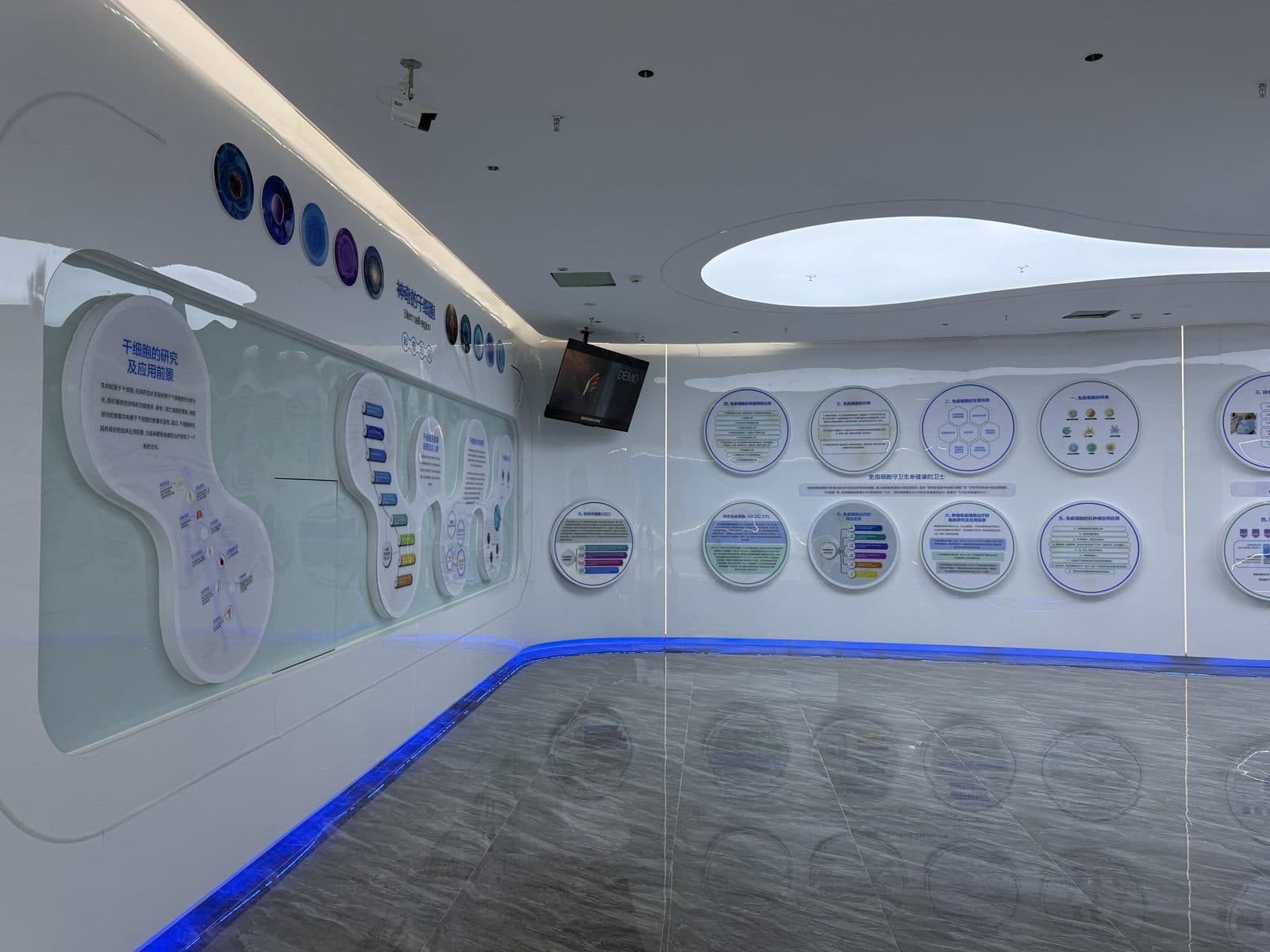
About the area
The essence of the field
In essence, cellular and regenerative medicine helps the body recover with its own resources — cells, immune cells and growth factors — rather than only removing a symptom.
This is its fundamental difference from conventional therapy. A painkiller suppresses the pain signal; a blood-pressure drug holds it in range while you take it. That is necessary and important medicine, but it works on the manifestation. The regenerative approach addresses the resource of recovery itself: it helps tissues renew and restore function.
Most programmes are based on autologous material — the patient's own cells: they are isolated, cultured or activated in a certified GMP-standard laboratory, and returned to the body. Hence minimal foreign material and, as a rule, good tolerance.
This is a regulated field: each cellular technology is separately permitted by the Boao Lecheng zone regulator — for a specific hospital and specific indications, with an ethics committee and monitoring. For most indications, cellular programmes remain developing methods, which is why they are used by indication and after diagnosis. Some of the cluster's drugs and technologies are registered in the US, EU and Japan and are used here earlier than they become available in most countries. Scientific backing is provided by the University of Science and Technology of China (USTC).
MedBridge's role is access and support: we review your situation, match the cluster's specialist physicians, and take on documents, translation and logistics. We do not diagnose remotely — indications and the composition of a programme are determined by a physician after diagnosis.
How it works
What actually happens — step by step
Strip away the jargon and the mechanism is clear: your own recovery resource is taken, prepared in a laboratory and returned.
- 11. Collection
A small amount of your own material — cells or plasma — is taken. Quick and outpatient.
- 22. Laboratory (GMP)
In a certified GMP-standard laboratory the cells are isolated, cultured or activated — under strict quality control.
- 33. Return
The prepared cells are returned to you to support tissue and function recovery with the body's own resources.
- 7
- cellular-medicine methods in the cluster
- 150+
- markers in the extended check-up
- 22
- products in the real-world-data (RWD) pilot
- 24/7
- a personal coordinator and interpreter
Directions
Four directions of cellular medicine
The whole range of cluster programmes comes down to four clear directions. Which one is indicated in your case is determined by a physician from the diagnostic findings.
Stem cells (MSC)
Mesenchymal stem cells support tissue restoration and the regulation of inflammation — the basis of most regenerative programmes, from joints to general recovery.
Immune cells (NK, DC/CTL)
The patient's own immune cells are isolated, strengthened and returned to the body to support natural defences. This direction includes NK therapy and cellular immunotherapy for persistent HPV.
Growth factors and plasma (peptides, PRP)
A concentrate of growth factors obtained from the patient's own plasma, triggering the natural processes of tissue renewal — for skin, joints and general tone.
Purification and targeted support
Apparatus-based plasma purification (DFPP), neuro-nutritive support of the nervous system, exosome and organ programmes — by indication.
What suits you
A guide by your goal
You don't need to choose the method yourself — a physician determines it after diagnostics. But to orient you: here's what is most often considered for each goal. Tap the one closest to you to open the method page.
Joints, wear, back pain
Most often considered: stem cells (MSC) and PRP.
Fatigue, immunity, restoring energy
Most often considered: NK therapy.
Skin, tone and age (anti-age)
Most often considered: anti-age and the LaViv technology, peptides and PRP.
Nervous system, recovery after stroke
Most often considered: neuro-regeneration.
Persistent high-risk HPV
Most often considered: cellular immunotherapy for HPV.
Blood cleansing, lipids, vascular risks
Most often considered: plasma cleansing (DFPP).
The difference
How it fundamentally differs from conventional treatment
The essential point to grasp from the start: this is a fundamentally different approach, not another medication.
- Works with the cause, not only the symptom
The aim is not to mute a sign, but to support the restoration of tissues and function using the body's own resources.
- Your own cells
Autologous material is used most often — minimal foreign matter and, as a rule, good tolerance.
- Outpatient, no surgery
Most programmes involve no hospitalisation or long recovery: a procedure and follow-up, not surgery.
- Individual, from your diagnosis
The programme is built for one specific person from the check-up results, not from a universal protocol.
- Alongside, not instead
Cellular methods complement conventional medicine — by indication and in agreement with your physicians.
- Access you don't have at home
Legal access to cellular programmes permitted by the regulator of the state Boao Lecheng zone — often earlier than they appear at home.
Who it suits
What people most often consider cellular medicine for
Below are the situations in which people turn to cellular medicine most often. If you recognise yourself in even one, that is a reason to talk to a coordinator. This is not a promise of cure: the method's relevance in your case is determined by a physician after diagnosis.
- Joints and mobility
Discomfort and stiffness, a wish to restore movement without major surgery — a common reason to consider regenerative methods.
- Recovery after injury and strain
When it matters to accelerate and support natural recovery — in agreement with the treating physician.
- A weakened immune system
Frequent illness, a sense that 'the body is giving way' — situations in which cellular immune support is considered.
- Age, tone and skin quality
A wish to support wellbeing and appearance at the cellular level, not only cosmetically.
- Nervous-system recovery
Within rehabilitation for neurological states — strictly by indication and by a multidisciplinary decision.
- 'Tests are normal, but the energy is gone'
When conventional work-up finds no disease yet quality of life has dropped — a reason to discuss a programme with a specialist.
Science
Scientific basis and regulatory status
What trust in this field rests on — briefly and by the facts.
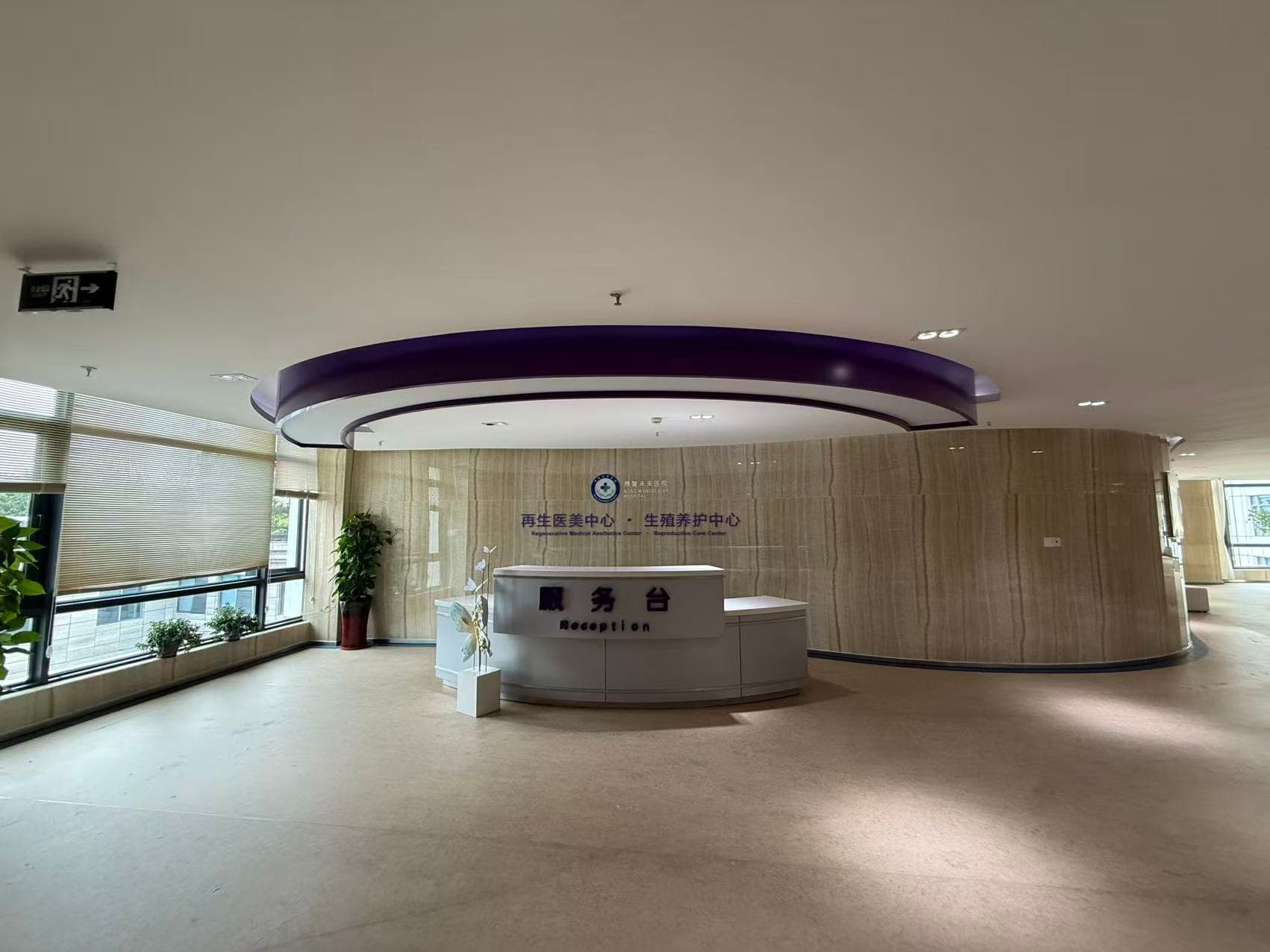
- Scientific base — USTC
The University of Science and Technology of China (USTC) provides scientific backing for the cluster's cellular programmes — not a 'private lab with no name'.
- Some technologies registered in the US, EU, Japan
Some of the cluster's drugs and technologies are already registered on leading markets and are used here earlier than they reach most countries. Cellular programmes are used under a separate permit from the zone regulator — for a specific hospital and specific indications.
- A state pilot zone
The zone's special legal status (State Council authority), an ethics committee, monitoring and a real-world-data (RWD) platform — why early access here is legal and regulated.
- GMP / ISO and cell control
Manufacturing in certified laboratories with multi-stage control: sterility, viability and activity of every batch of cells.
The moment
Quite possibly what you've been looking for
Many have heard of regenerative medicine as something out of the future — promising, but distant and out of reach. In reality the field already exists: legally, on a scientific basis, and one flight away. Technologies you don't yet have at home can be obtained today — with specialist physicians and support in your language at every step.
Why travel
Why people travel to China for this
A short, honest answer to the main question.
It is not about 'cheaper' or 'exotic'. It is about access: in the Boao Lecheng zone, cellular programmes are used legally — under a separate permit from the zone regulator, for a specific hospital and specific indications — and often earlier than in most countries. Some of the cluster's technologies are registered in the US, EU and Japan. At home these programmes may not exist at all — or may arrive years from now. Here they are delivered by specialist physicians, with USTC's scientific backing, in certified laboratories.
And because you don't have to figure all this out alone and in a foreign language. We take on the journey: diagnostics, documents, interpreting and support. You arrive to a result, not to chaos.
Methods
7 methods of cellular medicine
Each method has its own detailed page: what it is, how it goes, who it suits, safety and cost. What you specifically need is determined by a physician.
NK therapy
Immune support with your own NK cells — the 'sentinels' of innate immunity.
Stem cells (MSC therapy)
Mesenchymal stem cells for tissue restoration and reduced inflammation — by indication.
Peptide therapy & PRP
Growth factors from your plasma — a natural impulse to renew.
Anti-Age programme
Comprehensive work on wellbeing and skin quality at the cellular level, including LaViv (FDA-registered).
Neuroregeneration
Neuro-nutritive support of the nervous system within rehabilitation — by neurology.
HPV — cellular immunotherapy
A cellular approach to persistent HPV — by indication, not a replacement for screening or vaccination.
Plasma purification (DFPP)
Apparatus-based double-filtration plasma purification — by indication and tests.
Plus Chinese medicine
Cells and TCM — in one treatment plan
A cell technology works on the tissue. Pain, sleep, recovery and the habits between courses are the work of Traditional Chinese Medicine. Here the two are combined in one hospital, by one team.
- What TCM adds to a cell programme
Acupuncture and tuina relieve pain and restore movement while the tissue recovers; herbal medicine and routine keep working for months after you return home.
- In mainland China, this is possible only here
The pilot zone is the only regime in mainland China where cell technologies are used lawfully on a paid basis, and Chinese medicine is part of hospital care. In Europe and the US, TCM usually sits outside hospitals and cell therapies outside any registry.
A 7-day TCM course is from ¥4,100 in procedures; the combination is prescribed by the hospital's physician by indication. How it works → · TCM programmes →
Safety
Standards and a responsible approach
The approach is built around patient safety and verifiable quality.
- Most often — your own cells, minimal foreign material
- Manufacturing in certified GMP / ISO laboratories
- Multi-stage control of every batch of cells
- Outpatient, under the supervision of specialist physicians
- Only by indication — does not replace necessary treatment
Where the cells come from
Whose cells these are — and whose they are not
The most common question and the main source of distrust in this field. Here is the straight answer.
- Most often — your own cells
The material is taken from you, prepared in the laboratory and returned to you. That removes the compatibility question and makes the procedure more predictable.
- Sometimes — donor umbilical cord cells
Certain technologies use umbilical cord mesenchymal cells from a certified bank, with the full set of material checks.
- No embryonic material is used
The question people ask most often. Cluster programmes do not use embryonic cells — the work is with your own cells or with umbilical cord cells.
- Origin is always documented
Every batch has a history: where the material came from, how it was prepared, which checks it passed. That is part of the GMP standard, not a courtesy.
Honest about the risks
What can go wrong
As with any medical intervention, there are adverse reactions. A clinic that does not warn you about them is more dangerous than the procedure itself.
- Local reaction
Soreness, swelling or redness at the injection site — the most common and usually short-lived.
- Systemic reaction
A brief rise in temperature or fatigue in the first 24 hours. The physician explains in advance what counts as normal and what is a reason to call.
- Individual intolerance
As with any preparation. That is why contraindications and allergy history are assessed before the programme.
- Discussed before consent, not after
Possible reactions are discussed with you before you sign informed consent. A clinic that skips this is a bad sign anywhere in the world.
For why the Boao Lecheng zone has legal access to technologies unavailable in most countries, see “How much earlier”: the specific drugs and the years they arrived here.
Process
How it all works — from enquiry to programme
- 1Documents and goal
You describe the situation and goal and send your records. We advise what to consider and translate the documents.
- 2Consultation
A cluster specialist reviews your picture and explains realistic options — with no 'online' diagnosis.
- 3Diagnosis (check-up)
A precise picture of health and an assessment of contraindications. A programme does not begin without it — this is the basis of safety.
- 4Programme and support
The physician assembles an individual programme; a coordinator and interpreter are beside you at every step, including follow-up after the course.
A coordinator in your language is with you at every step: you understand what is happening and why, and all documents and communication are in a language you understand.
Go deeper
Detailed reads — in the journal
The subject matters and deserves careful study. We've written clear pieces so you can understand it before the trip.
What cellular medicine is
A foundational overview of the field — where to start.
Stem cells for joints
How the regenerative approach is considered for joint pain and osteoarthritis.
What NK cells are
A simple explanation of the immune 'sentinels' and cellular immunotherapy.
Cell-therapy methods compared
How the methods differ and how to grasp what it's all about.
Diagnosis is the essential first step
Every programme begins with a consultation and a precise diagnosis (check-up). Treatment does not begin without an assessment of indications and contraindications.
Questions
Frequently asked questions
The approach is built around safety: most often the patient's own cells are used, manufacturing runs in certified GMP laboratories with multi-stage control, and the programme itself is outpatient, under physician supervision and only by indication. As with any method, there are contraindications — assessed at diagnosis.
It is a regulated field, not improvisation: each cellular technology is separately permitted by the Boao Lecheng zone regulator — for a specific hospital and specific indications, with an ethics committee and monitoring, and with USTC's scientific backing. Some technologies are registered in the US, EU and Japan; for most indications, cellular programmes remain developing methods. That is why they are used by indication and after diagnosis, do not replace standard treatment and do not promise an outcome — the method's relevance in your case is determined by a physician.
Most often your own (autologous): they are isolated, processed in the laboratory and returned to you. This reduces immune reactions. In certain programmes, by indication, other sources are possible — the physician will explain the logic beforehand.
Most programmes are outpatient, with no surgery or long recovery: usually injections or infusions under supervision. The specific sensations depend on the method — they are described at the consultation.
It depends on the programme: some methods mean a few days on Hainan, others a course. The physician will set a realistic schedule and duration after diagnosis. We plan the logistics and timing around you.
Not 'better in general' — it is access to something different: to technologies you don't yet have at home, with specialist physicians and USTC's scientific base. What suits you and whether you need it is decided by a physician; we help you gain access and understand.
Start with a consultation and diagnosis. Online, only a preliminary review is possible; diagnosis and prescriptions are made in person, after the check-up. We'll tell you which documents help prepare a review before the trip.
No — and no honest party guarantees one. Cellular programmes are used by indication, do not replace standard care and do not promise a specific outcome. We promise something else: access, transparency and support at every step.
Discuss a programme with a coordinator
Describe your situation and goal — we'll tell you which documents help prepare a preliminary review, and what the next steps are.