A physical method
Purification with no chemical agents added — blood passes through a single-use closed circuit.
 MedBridgeBoao Lecheng · Hainan, China
Plasma therapy · lipids
DFPP is a Japanese double-cascade plasma filtration technology. It's a physical method: blood is purified through filters, without chemical agents. It's considered for excess lipids or raised blood viscosity, based on test results. The method does not replace diet and prescribed therapy; the physician decides.

About the method
DFPP (Double Filtration Plasmapheresis) is a method of apparatus-based plasma purification. It's a physical process with no chemical agents added: blood passes through a single-use closed circuit, plasma is separated and filtered through membranes, after which the cellular elements (red cells, white cells, platelets) are returned to the body.
The method can lower excess lipids in plasma — low-density cholesterol (LDL) and triglycerides — and remove some metabolic products. A Japanese automated system, JUNKEN Medical (model JUN 55X), registered as an imported medical device, is used; depending on the goal, double plasma filtration (DFPP) or a variant with additional adsorption is possible — by the physician's decision. The procedure runs under constant monitoring of pressure, air bubbles and blood leakage, with a single-use closed circuit.
DFPP does not replace baseline therapy (diet and medication as prescribed) — it's an additional procedure considered on an individual basis.
How it works
Purification with no chemical agents added — blood passes through a single-use closed circuit.
Plasma is separated from the blood cells and passed through membrane filters that hold back the larger “excess” molecules.
Above all, excess “bad” cholesterol (LDL) and triglycerides, plus some metabolic products.
The blood cells (red cells, white cells, platelets) are returned to the body.
Scientific basis
Facts about the method's origin, standards and quality control — what trust is built on. This is not a promise of a result: a physician decides whether it's right for you.
Double-cascade plasma filtration (DFPP) is an established apparatus-based procedure for purifying blood plasma.
Certified Japanese-made equipment (JUNKEN) with single-use circuits is used.
Prescribed by indication — for example, in hyperlipidaemia and raised blood viscosity, by the physician's decision.
Status and evidence
Where other clinics print success rates, we print the regulatory status, the level of evidence and what that means for your expectations. Whether the method is used in your case is decided by the hospital's physician.
DFPP is a device-based procedure — a medical device, not a cell technology. It is used in the cluster's hospitals on a physician's indication, on certified Japanese equipment.
Lipid apheresis systems are registered as medical devices in Japan, the EU and the US. The method itself is in the guidelines for severe inherited lipid disorders and very high lipoprotein(a) that do not respond to drugs.
The per-session reduction in LDL and lipoprotein(a) is measurable and reproducible — an objective result visible in tests before and after. Whether a course lowers heart-attack and stroke risk in people without inherited hyperlipidaemia has not been studied in randomised trials.
The method makes sense for persistently high lipids that diet and statins have not brought down — not as “cleansing the body”. Whether you need it is decided by the physician from your lipid panel.
The team
Examples of the specialist physicians we work with in this area. The cluster holds several hospitals — the clinic and the specialist are matched to your case. Physicians prescribe and deliver the treatment; MedBridge coordinates the route.
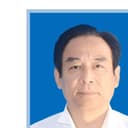 Liu ShaoyuanInternal medicine · nutrition
Medicine and nutrition science; over 30 years of clinical practice.
Who it's for
Most people who consider this method recognise themselves in situations like these. It's not a prompt for self-treatment — whether it fits your case is decided by a physician after consultation and diagnostics.
You have check-ups regularly and don't ignore raised lipids or blood viscosity.
Baseline therapy is under way, but you want to consider an additional tool — as assessed by a physician.
Fatty liver, metabolic disorders — you want a systematic approach under a physician's oversight.
You prefer a physical method with no chemical agents added.
You're considering plasma purification within a considered detox or recovery programme.
The moment
High lipids rarely hurt — which is why people carry them for years, putting off a decision. DFPP is a chance to see the result of addressing them in your test numbers, not in guesswork. Whether the procedure makes sense, a physician will judge from your bloodwork — honestly, including telling you if you don't need it.
Why patients consider it
These are reasons for interest in the method, not a promise of outcome: the physician sets the final decision and realistic expectations.
Purification through membranes in a closed single-use circuit, with no chemical agents added.
An automated system with single-use consumables and monitoring at every stage.
The physician determines suitability and volume from test results — the method complements rather than replaces therapy.
Certified clinics of the Boao Lecheng zone, a personal coordinator, confidentiality.
Indications
May be considered by a physician for the conditions listed — after tests and assessment of contraindications.
Cost
Approx. ¥98,000–128,000 (≈ $13,600–$17,800)
A full set of consumables — membranes, lines — is used once; a significant part of the cost.
A session takes several hours on the Japanese JUNKEN system with constant monitoring of pressure and composition.
Lipid profile and blood markers before and after the session — the effect is assessed objectively, by the numbers.
The exact cost is determined only after diagnostics — the programme is tailored individually, by indication. Payment is made directly to the cluster's clinic, by official invoice. For context: cells into the knee here cost ¥36,000 (≈ $5,000) per injection at the zone's registered price, against $35,000–50,000 in Western European clinics; a systemic infusion here is from ¥50,000 (≈ $6,950), against $20,000–22,000 in Japan and Switzerland. All prices → · Zone registry → · Country comparison →
Safety
The approach is built around patient safety and verifiable quality.
Process
Blood tests (lipids and more), assessment of indications.
Venous access; blood passes through a single-use circuit with plasma filtration.
Purified plasma and cells are returned to the body.
The physician monitors the indicators.
The physician determines volume and suitability from test results. The method does not replace baseline therapy and does not guarantee a result.
Plus Chinese medicine
A cell technology works on the tissue; pain, sleep, recovery and routine between courses are the work of Traditional Chinese Medicine. In the cluster the two can be combined in one plan on one trip — in mainland China, only here. The combination is prescribed by the physician after the work-up.
A 7-day TCM course is from ¥4,100 in procedures. How they are combined → · TCM programmes →
Outcomes
The effect is assessed objectively — by the lipid profile and blood indicators before and after the procedure.
DFPP complements diet and prescribed therapy rather than replacing them.
The physician sets the number and frequency by the dynamics of the indicators; sometimes a repeat is needed.
The method removes some of the excess in plasma but does not guarantee a lasting result without lifestyle change and baseline therapy.
Safety
Openness about safety is part of a responsible approach.
A closed single-use circuit and membrane filtration — minimal contamination risk.
Sometimes a temporary drop in blood pressure, mild dizziness or tingling (from the agent that keeps blood from clotting in the circuit). The procedure runs under supervision.
Along with excess lipids, some plasma proteins and factors may temporarily fall — this is monitored throughout.
Contraindications usually considered include marked anaemia, low protein, active bleeding or clotting disorders, allergy to circuit components. The physician decides.
Safety
DFPP is an apparatus-based procedure on a certified Japanese JUNKEN system (model JUN 55X): a single-use closed circuit for every session, with constant monitoring of pressure, air bubbles and blood leakage. It's a physical method with no chemical agents added, under a physician's supervision throughout. The effect is assessed objectively — by the lipid profile and bloodwork before and after the session. A coordinator accompanies you before, during and after the visit, including by telemedicine.
Every programme begins with a consultation and an accurate diagnosis (check-up). Treatment does not start without assessing indications and contraindications.
Questions
Yes. Every programme begins with a consultation and diagnostics (check-up). No therapy starts without an accurate diagnosis and assessment of contraindications — that is the basis of safety.
Plasma purification is a separate group of methods (plasmapheresis/DFPP, haemodialysis, haemoperfusion). DFPP is double plasma filtration; the physician determines the specific method.
No. DFPP is a physical filtration method with no chemical agents added; single-use consumables are used.
A session takes several hours under supervision; the physician sets the number and frequency by the dynamics of the indicators. The active part of the visit is agreed in advance.
It runs through venous access, like a drip — no surgery. A temporary drop in blood pressure or mild dizziness is occasionally possible; everything is monitored, and tolerability is assessed individually by the physician.
It depends on the number of sessions: some patients fit it into a few days, a course takes longer. The exact schedule and trip length are agreed in advance, before travel.
The number of sessions and the volume (DFPP or with an adsorption column). See the Pricing page for a guide; the estimate is formed after tests and paid directly to the clinic.
Tell us your situation and medical goal — we'll advise which documents help prepare a preliminary review and what the next steps could be.