A concentrate from your blood
A small volume of blood is spun in a centrifuge to isolate platelet-rich plasma (PRP) and its growth factors.
 MedBridgeBoao Lecheng · Hainan, China
Cellular medicine · growth factors
Peptides and PRP work with growth factors, including those derived from your own plasma, to support tissue renewal. The method is part of the cluster's recovery and anti-age programmes. The protocol is tailored individually, following a consultation. The decision rests with the physician.

About the method
Your own blood contains “building material” for tissue renewal — growth factors. PRP (platelet-rich plasma) and peptide complexes use exactly these; the material is taken mainly from your own plasma.
It's a gentle support for natural regeneration. The method works both on its own and as part of a larger recovery or anti-age programme.
In addition, by specific indication, plasma purification by DFPP (a Japanese double-filtration plasma technology) may be considered — the physician decides after diagnostics.
How it works
A small volume of blood is spun in a centrifuge to isolate platelet-rich plasma (PRP) and its growth factors.
Growth factors act as “instructions” for cells — prompting division, renewal and nourishment of tissue in the target area.
Given precisely (skin, a joint, the hair zone) or as part of a comprehensive programme — the physician chooses the route.
Mainly your own plasma is used, so the approach is delicate and carries minimal risk.
Scientific basis
Facts about the method's origin, standards and quality control — what trust is built on. This is not a promise of a result: a physician decides whether it's right for you.
Platelet-rich plasma (PRP) has been used in sports medicine, orthopaedics and aesthetics for decades — an established approach, not an experiment.
Peptides are short protein chains involved in regulating the body's processes; they are studied as bioregulators of tissue repair.
The preparation is isolated from your own plasma right before the procedure — to cluster standards and under specialist supervision.
Status and evidence
Where other clinics print success rates, we print the regulatory status, the level of evidence and what that means for your expectations. Whether the method is used in your case is decided by the hospital's physician.
PRP is prepared from your own blood immediately before injection; as an autologous product it needs no registration and is used in the zone's hospitals under ordinary medical rules. Peptide complexes are prescribed by a physician.
PRP preparation systems are registered as medical devices in the US, the EU and China. There is no separate “approval of PRP for osteoarthritis” anywhere — it is a technique, not a drug.
In knee osteoarthritis PRP is better studied than cell therapies: meta-analyses of randomised trials show pain reduction for 6–12 months compared with hyaluronic acid, with wide variation between protocols. In tendinopathies the data are mixed. The evidence base for peptides is weak.
A supportive method with low risk and a moderate effect: it is usually the starting point, with cell programmes considered by indication. It does not replace surgery or joint replacement.
The team
Examples of the specialist physicians we work with in this area. The cluster holds several hospitals — the clinic and the specialist are matched to your case. Physicians prescribe and deliver the treatment; MedBridge coordinates the route.
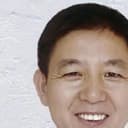 Wang JunchengRegenerative medicine · vascular surgery
Deputy chief physician; a graduate of Zhejiang University, a “highly qualified specialist” of Hainan (2019). Experience with LaViv, PRP, stem and immune cells for joint, nervous-system and anti-age recovery.
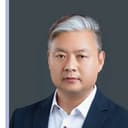 Liu JunweiAesthetic medicine · anti-age
Head of the aesthetic-medicine centre; a leading specialist in facial anatomy and contour, vice-president of the Hainan Medical Aesthetics Association, a certified Allergan trainer (Juvéderm, Botox).
Who it's for
Most people who consider this method recognise themselves in situations like these. It's not a prompt for self-treatment — whether it fits your case is decided by a physician after consultation and diagnostics.
You favour an approach based on your own plasma, without outside substances.
Sport, flights, a packed schedule — and your body needs proper recovery.
You notice your skin has lost firmness and freshness, and you want a delicate, natural approach.
You're looking for a targeted solution for a specific goal — as assessed by a physician.
You're considering PRP as an element of a comprehensive anti-age or recovery programme.
The moment
The most common path into cellular medicine starts exactly here: PRP and peptides are the accessible first step into the cluster. A few days on the island give you more than a procedure — access to the whole ecosystem, from diagnostics to NK and MSC, if a physician sees the indications. Many discover this place precisely this way.
Why patients consider it
These are reasons for interest in the method, not a promise of outcome: the physician sets the final decision and realistic expectations.
Mainly your own plasma is used — natural, with minimal risk.
The procedure takes 40–60 minutes, usually without anaesthesia.
Here PRP and peptides work in concert with NK, MSC and LaViv — one programme that is hard to assemble in this form anywhere else; by indication, DFPP plasma purification can be added.
Certified clinics of the Boao Lecheng zone, single-use materials, a personal coordinator and confidentiality.
Indications
May be considered by a physician for the goals listed. A specialist determines suitability after consultation.
Cost
From approx. ¥5,800 (≈ $800)
PRP is prepared from your own blood right before the procedure — isolation and enrichment are part of the visit's work.
Usually several procedures 2–4 weeks apart; the estimate is built for the chosen area and number of sessions.
One of the cluster's most accessible methods: many start here, adding NK or MSC by indication.
The exact cost is determined only after diagnostics — the programme is tailored individually, by indication. Payment is made directly to the cluster's clinic, by official invoice. For context: cells into the knee here cost ¥36,000 (≈ $5,000) per injection at the zone's registered price, against $35,000–50,000 in Western European clinics; a systemic infusion here is from ¥50,000 (≈ $6,950), against $20,000–22,000 in Japan and Switzerland. All prices → · Zone registry → · Country comparison →
Safety
The approach is built around patient safety and verifiable quality.
Process
Assessment of indications and preparation.
Blood draw, isolation of growth factors and peptides.
40–60 minutes, usually without anaesthesia.
The physician assesses dynamics.
A course is usually 1–2 procedures, 2–4 weeks apart. The effect is individual; the plan and realistic expectations are discussed with the physician at consultation.
Plus Chinese medicine
A cell technology works on the tissue; pain, sleep, recovery and routine between courses are the work of Traditional Chinese Medicine. In the cluster the two can be combined in one plan on one trip — in mainland China, only here. The combination is prescribed by the physician after the work-up.
A 7-day TCM course is from ¥4,100 in procedures. How they are combined → · TCM programmes →
Outcomes
Growth factors support natural recovery gradually; usually a course is needed, not a single procedure.
The physician assesses skin and tissue dynamics at follow-up visits; for aesthetic goals — by photo over time.
Support for skin quality, tissue recovery and hair — by indication, not a guaranteed result.
The effect is individual and depends on the starting state; realistic expectations are discussed with the physician.
Safety
Openness about safety is part of a responsible approach.
PRP is prepared from your plasma — the risk of allergy and rejection is minimal.
At injection sites, temporary redness, swelling or small bruises are possible — usually resolving within a few days.
The procedure takes 40–60 minutes, usually without anaesthesia; single-use sterile materials are used.
Contraindications usually considered include active infection in the area, clotting disorders, certain blood conditions and pregnancy — the physician decides.
Safety
PRP and peptides are prepared from your own blood — right before the procedure, with single-use sterile materials, under specialist supervision. No donor or synthetic material: so the risk of allergy or rejection is minimal. The procedure takes 40–60 minutes, usually without anaesthesia and outpatient — no time out of your schedule. A coordinator stays in touch after the visit too, including by telemedicine.
Every programme begins with a consultation and an accurate diagnosis (check-up). Treatment does not start without assessing indications and contraindications.
Questions
Yes. Every programme begins with a consultation and diagnostics (check-up). No therapy starts without an accurate diagnosis and assessment of contraindications — that is the basis of safety.
PRP uses the patient's own platelet-rich plasma; peptide therapy uses peptide complexes. They are used separately or together, by the physician's decision.
The procedure takes 40–60 minutes and is usually done without anaesthesia. Sensation and tolerability are individual.
A plasma-purification procedure that may be considered by specific indication. The physician determines suitability; it is not a mandatory part of the programme.
Usually a course of several procedures; the active part of the visit is a few days, agreed in advance.
The area, volume and number of procedures. See the Pricing page for a guide; the estimate is formed after consultation and paid directly to the clinic.
Tell us your situation and medical goal — we'll advise which documents help prepare a preliminary review and what the next steps could be.