Along meridians and points
The same maps of points as in acupuncture — delivered by hand: pressing, kneading, vibration.
 MedBridgeBoao Lecheng · Hainan, China
TCM · Method 3
A full manual discipline of Chinese medicine: the physician works by hand along meridians and points — kneading, pressing, gently stretching. In its logic it is 'acupuncture without needles' — and one of the most pleasant methods of TCM. Used by indication; decisions are made by physicians.
About the method
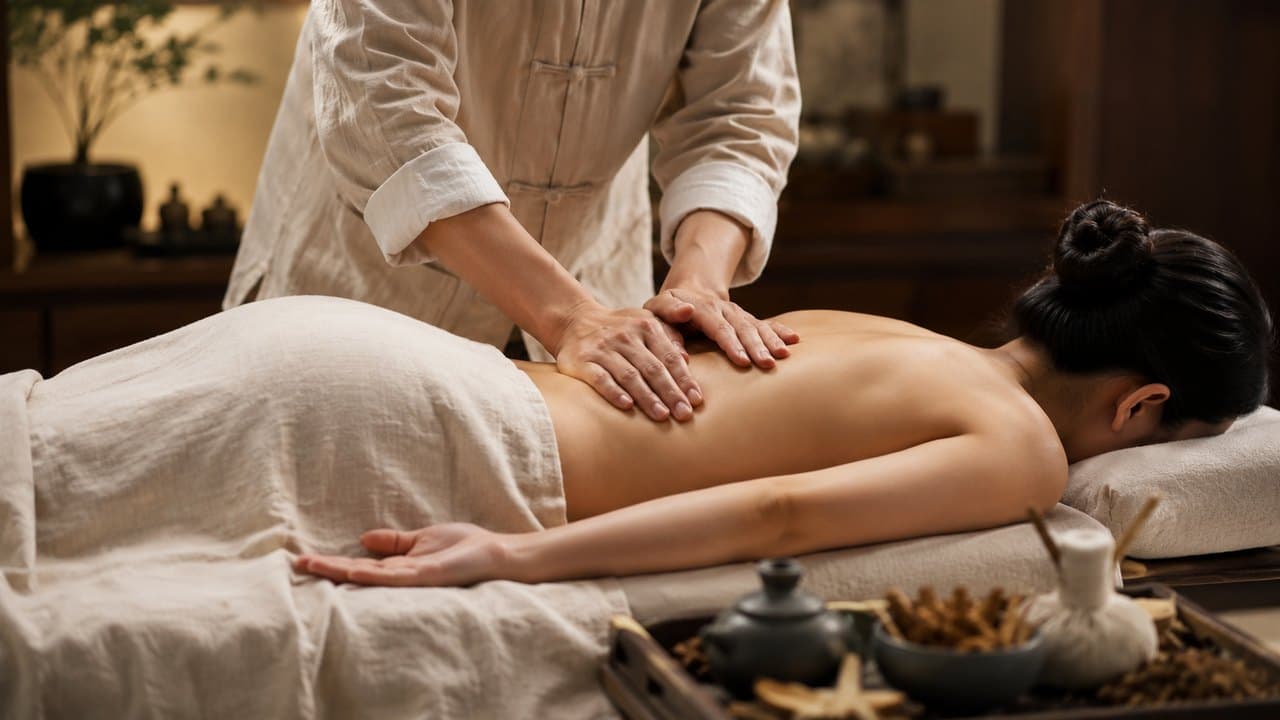
Tuina (推拿 — 'push and grasp') is the therapeutic bodywork of Chinese medicine and one of its foundational disciplines. What sets tuina apart from familiar massage is its logic: the physician works not simply with muscles but with the same meridians and points as the acupuncturist — through pressing, kneading, vibration and gentle traction.
In China tuina is taught at medical universities as a separate specialty: a tuina physician knows anatomy, indications and contraindications, and matches the technique to the task — from delicate relaxing work to deep release of chronic knots.
For the patient it is one of the most comfortable methods of TCM: no equipment, only the specialist's hands. The effect, however, is entirely serious — after a first session with an experienced physician, the difference from 'ordinary massage' is obvious.
Tuina combines easily with other methods: a session is often built as 'needles + tuina' or 'tuina + cupping', where the techniques reinforce one another.
How it works
The same maps of points as in acupuncture — delivered by hand: pressing, kneading, vibration.
Deep work with tense zones and triggers — releasing chronic knots that ordinary massage does not reach.
Gentle traction and mobilisation — a careful return of mobility without abrupt manipulation.
Depending on the technique, a session can deeply relax or re-energise — the physician chooses the mode for your goal.
Process
The physician assesses muscles and joints, the pulse and the overall picture — and selects the technique and depth of work.
30–60 minutes of hands-on work: back, neck, limbs or the whole body — by plan. Depth is always agreed with your comfort.
Point pressure along the meridians and gentle joint traction — the signature part of tuina.
The physician comments on findings (zones of tension, asymmetries) and gives recommendations — from exercises to further sessions.
After a session, lightness and warmth in the worked zones are typical; after deep work a mild 'muscular' tiredness the next day is possible — like after good training. The course and rhythm are set by the physician for your goal.
What people come with
These are the situations in which the method is most often considered — not a promise of cure. Its relevance in your case is determined by the physician after diagnosis.
Chronic tension and the toll of desk work — tuina's main territory.
Deep knots and trigger zones that ordinary massage does not reach.
Stiffness and discomfort — gentle mobilisation without abrupt manipulation.
Sport, flights, intense work — a quick return of tone.
Tuina's relaxing techniques are one of the most comfortable ways to recover.
Work with the neck-and-collar zone — a frequent reason for visits.
Status
Facts about origin, recognition and standards — what trust in the method is built on.
Tuina is a separate training track at China's medical universities, with anatomy and clinical practice.
Several tuina techniques are close to modern manual therapy and myofascial methods — but the school is centuries older.
In Chinese hospitals tuina is an ordinary prescription in rehabilitation departments, not a spa service.
Safety
Openness about safety is part of a responsible approach.
Combinations
The classic pairings are 'needles + tuina' and 'tuina + cupping/gua sha': reflex action and manual work reinforce each other. Within cluster programmes tuina also complements rehabilitation courses well — in agreement with the treating physician.
The full picture of the area — methods, diagnosis, recognition and trip logistics — is on the Traditional Chinese Medicine page.
Describe your situation and goal — we'll match a specialist TCM physician, tell you which documents help, and propose the next step. We do not diagnose online.
Questions
In its logic and the specialist's training. Tuina is a medical discipline: the work follows meridians and points, with an understanding of anatomy, indications and contraindications. It is a therapeutic instrument, not only relaxation.
It depends on the task and technique: relaxing tuina is very comfortable; deep work on knots can be intense, but always within your tolerance — the depth is agreed with you.
Usually 30–60 minutes. The number depends on the goal: from a single restorative session to a course. The physician will propose a plan after the first session.
Yes: acute inflammation, certain vascular and bone conditions, skin problems in the work zone and others. That is why the session follows diagnosis, with the physician knowing your history.
Yes — that is a classic pairing, and sessions are often built exactly this way. The physician sets the sequence and load.
Tell us what's troubling you and what you'd like to achieve — we'll suggest realistic options and arrange a visit to a specialist TCM physician.