A formula, not a herb
The composition does the work: components strengthen the intended action of one another and soften side effects. The art of composing formulas is the heart of the discipline.
 MedBridgeBoao Lecheng · Hainan, China
TCM · Method 2
Not 'herbal tea' but the second pillar of Chinese medicine: thousands of described components, strict rules of combination, and a formula composed for one particular person — and revised as the course unfolds. Used by indication; decisions are made by physicians.
About the method
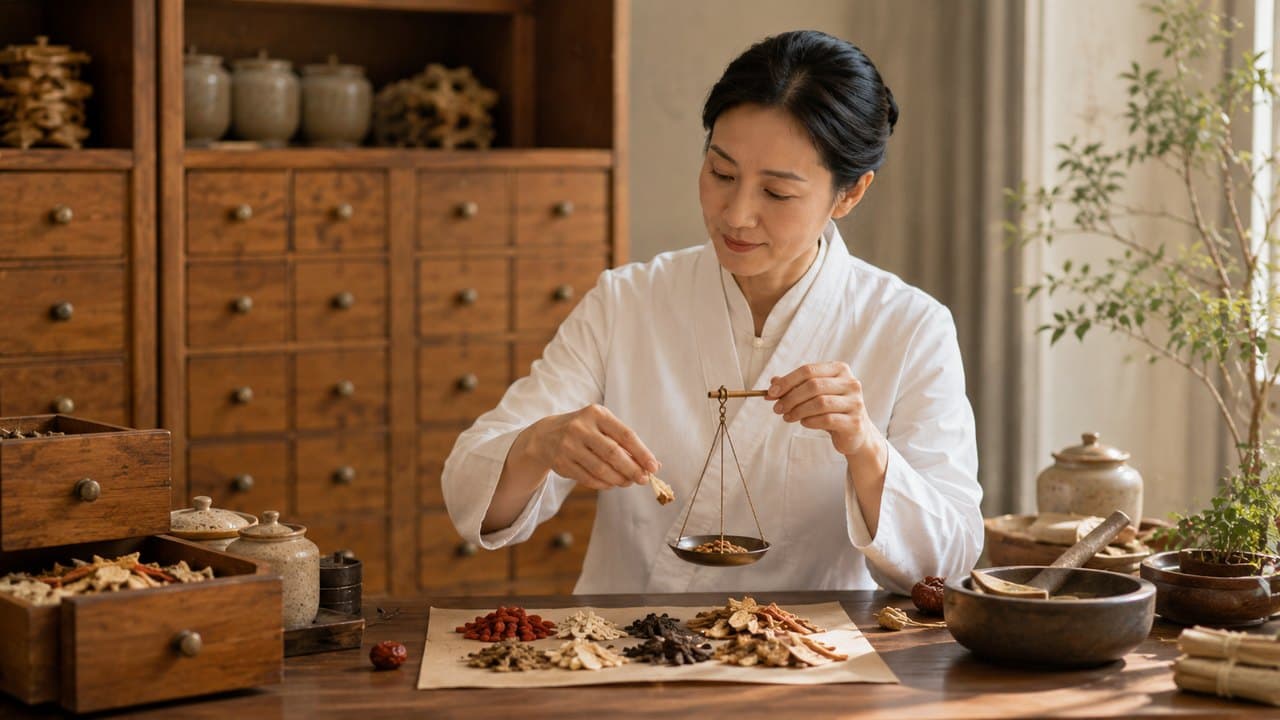
Chinese herbal medicine is a discipline in its own right, with university departments, a pharmacopoeia and a millennium of practice. At its core are not individual 'useful herbs' but formulas: compositions of 4–15 components, each with its role — principal, supporting, guiding, harmonising.
The key difference from familiar 'herbal blends' is individuality. The physician composes the formula for your picture: constitution, state, goal, tolerance. Two people with the same complaint will almost certainly receive different prescriptions. Through the course the composition is revised — the formula follows your state rather than staying fixed.
In licensed clinics the raw materials pass quality control and certification — pharmacy logic, not market-stall logic. The forms are convenient for a modern person: classic decoctions, soluble granules, capsules and ready preparations.
A word on safety: 'natural' does not mean 'harmless'. Real herbal medicine always means a physician who knows what you take and accounts for interactions with your medication. This is why we pass your records and medication list to the physician before anything is prescribed.
How it works
The composition does the work: components strengthen the intended action of one another and soften side effects. The art of composing formulas is the heart of the discipline.
The choice rests on 'four pillars' diagnosis: one person needs warming, another cooling, a third — digestive support.
The physician tracks your response and adjusts the composition: the formula changes as your state changes.
Licensed clinics work with certified materials and standardised extracts — the origin of components is traceable.
Process
Pulse, tongue, a detailed interview: the physician defines your 'constitution' and the task of the formula.
The physician writes the composition and explains the logic: what leads, what supports, what to avoid.
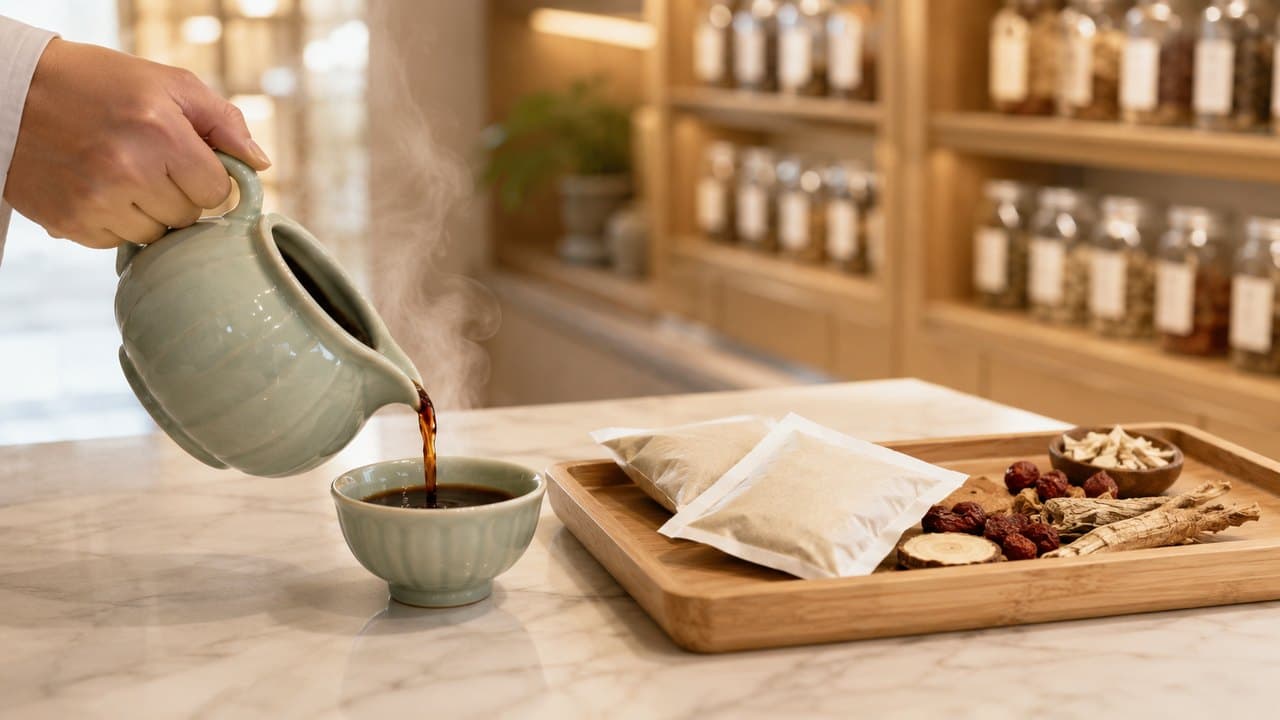
The clinic's pharmacy prepares the decoction or granules; you receive a clear intake schedule.
At follow-ups the composition is refined to your response. Part of the course can continue at home — with changes agreed remotely.
Herbal medicine acts gently and cumulatively: change is usually assessed in weeks, not days. The taste of decoctions is unfamiliar — people adapt quickly, and granules and capsules solve convenience when travelling.
What people come with
These are the situations in which the method is most often considered — not a promise of cure. Its relevance in your case is determined by the physician after diagnosis.
The classic territory of herbal medicine: heaviness, irregularity, a sensitive stomach.
Gentle support instead of 'heavy' solutions — by indication.
Strengthening formulas are a traditional specialty of the Chinese pharmacopoeia.
Discreet work with the cycle and transitional periods.
Support for the body in rehabilitation — in agreement with your treating physician.
Formulas that support energy and overall state.
Status
Facts about origin, recognition and standards — what trust in the method is built on.
The Chinese pharmacopoeia describes thousands of components and their quality standards — a state-regulated field.
Herbal medicine is taught at China's medical universities; prescribing is a physician's function, not 'a herbalist's advice'.
Standardised extracts and granules make the composition reproducible — something 'market blends' can never offer.
Safety
Openness about safety is part of a responsible approach.
Combinations
Herbal medicine is the classic second half of a TCM programme: formulas continue the work between acupuncture and tuina sessions. Part of the course conveniently continues at home after your return — we arrange contact with the physician to adjust the composition.
The full picture of the area — methods, diagnosis, recognition and trip logistics — is on the Traditional Chinese Medicine page.
Describe your situation and goal — we'll match a specialist TCM physician, tell you which documents help, and propose the next step. We do not diagnose online.
Questions
That is exactly why the formula is prescribed by a physician who knows your full medication list. Send us your records and the list of medicines — interactions will be accounted for. Starting herbal medicine without this is not advisable.
Classic decoctions are bitter and unfamiliar; people adapt quickly. If taste matters, soluble granules and capsules carry the same composition.
Herbal medicine acts cumulatively: dynamics are usually assessed after weeks of intake. The physician will set realistic timelines for your goal and adjust the composition along the way.
Yes, it is standard practice: granules and ready forms travel well. You receive a clear intake schedule, and changes can be agreed with the physician remotely through us.
The individual formula and the physician's prescription. A supplement is a universal off-the-shelf product; a TCM formula is composed for you, from certified materials, and adjusted to your response.
Licensed clinics work with pharmacy-grade materials that pass certification and quality control — the origin of components is traceable.
Tell us what's troubling you and what you'd like to achieve — we'll suggest realistic options and arrange a visit to a specialist TCM physician.