Deep warmth (moxa)
Warming a point works softer and deeper than a heating pad: warmth combines with the point's own reflex response.
 MedBridgeBoao Lecheng · Hainan, China
TCM · Method 4
Three related techniques China has refined into an art: deep warming with mugwort, vacuum work with cups, and gua sha scraping massage. One principle unites them — to awaken local circulation and clear stagnation. Used by indication; decisions are made by physicians.
About the method
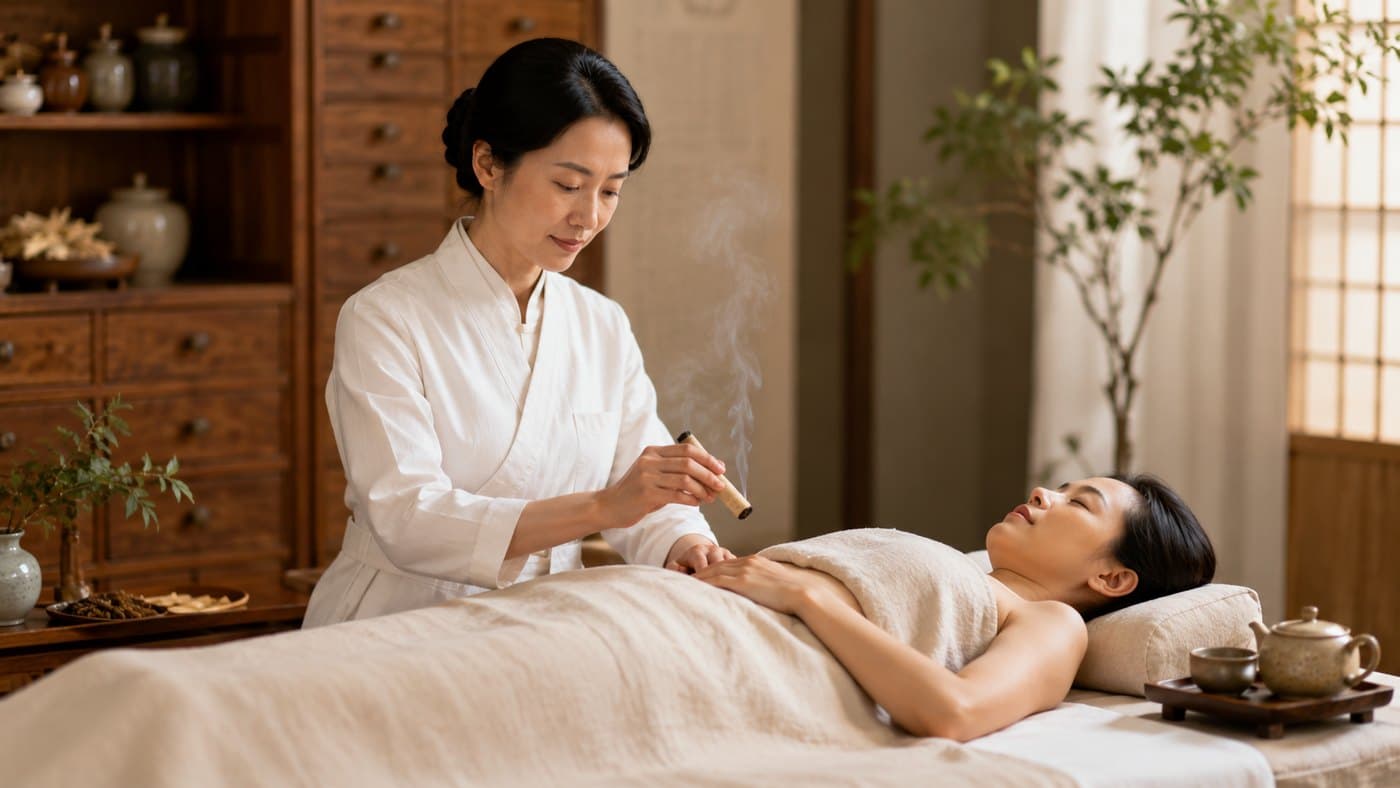
Moxibustion is the warming of biologically active points with smouldering mugwort (moxa): a mugwort cigar held at a distance from the skin, or cones placed on a needle. It feels like pleasant, penetrating warmth. In the tradition, moxa is the needle's 'sister': what the needle stimulates, moxa warms and sustains.
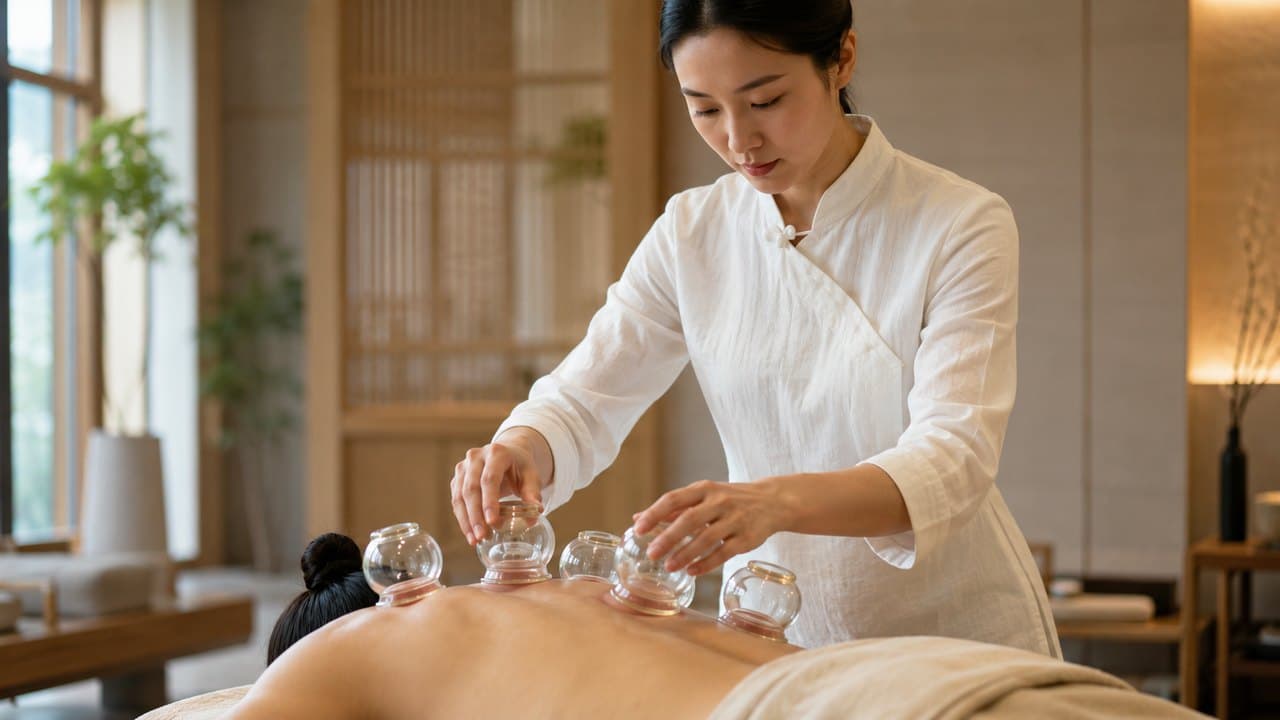
Cupping (vacuum therapy) works with local suction: glass or silicone cups are placed on the skin statically or glided gently over oil. The aim is to boost local circulation and disperse stagnation in the muscles. The characteristic round marks are not bruises in the everyday sense: they do not hurt and fade within days.
Gua sha is a scraping massage with a plate of horn, jade or steel over oil, along muscles and meridians. The intensity ranges from delicate cosmetic work (the face) to deep work on the back. After active gua sha a temporary redness remains — the sign of blood flushing to the zone.
The three techniques rarely live alone: the physician combines them with needles and tuina, composing the session for your goal — to warm, to relax, to clear stagnation or to invigorate.
How it works
Warming a point works softer and deeper than a heating pad: warmth combines with the point's own reflex response.
Suction increases blood flow to the zone and helps muscles release — the effect is felt at once.
Mechanical work on tissues over oil — clearing 'stagnation', working with the tone of skin and muscle.
Moxa on a needle, cups after tuina, gua sha along a meridian — the techniques assemble into pairings for the task.
Process
From the diagnosis the physician decides what your zone needs: warmth, vacuum, the scraper — or their pairing.
15–30 minutes of work: the warmth of moxa, placing or gliding the cups, gua sha strokes over oil.
Intensity stays in dialogue with you: the warmth pleasant, vacuum and scraper within comfort.
The zone is kept from cold for a few hours; cup and gua sha marks fade within days.
These techniques give the most physically tangible response in TCM: warmth, blood flow and release are felt right on the table. Cup and gua sha marks are temporary and painless; if open clothing or a photo shoot is ahead, tell the physician — the work zones will be planned accordingly.
What people come with
These are the situations in which the method is most often considered — not a promise of cure. Its relevance in your case is determined by the physician after diagnosis.
The classic situation: spasm, stiffness, a feeling of cold in the zone.
Shoulders and the collar zone of those working at a desk.
Cupping and gua sha have long been in athletes' arsenals — a fast return of muscle tone.
States where the tradition calls for warming — moxa's territory.
Long flights, sedentary months — the techniques restore circulation in the zone.
As an amplifier of the main session — at the physician's discretion.
Status
Facts about origin, recognition and standards — what trust in the method is built on.
Moxibustion is inscribed on the list of the intangible heritage of humanity together with acupuncture.
Vacuum therapy is used by physiotherapists and sports physicians worldwide — everyone has seen its marks on Olympians.
Local circulation boost and work with myofascial zones — the clear modern language of these techniques.
Safety
Openness about safety is part of a responsible approach.
Combinations
Moxa, cups and gua sha are born 'second numbers' of a session: the physician adds them to needles or tuina when a zone needs warmth or release. In cluster programmes they close a day of procedures well — the body leaves the session warm and settled.
The full picture of the area — methods, diagnosis, recognition and trip logistics — is on the Traditional Chinese Medicine page.
Describe your situation and goal — we'll match a specialist TCM physician, tell you which documents help, and propose the next step. We do not diagnose online.
Questions
Yes — the characteristic round marks are a normal response: they do not hurt and usually fade in 3–7 days. If avoiding them matters (beach, photo shoot), tell the physician — zones and intensity will be chosen accordingly.
The sensation is pleasant deep warmth, not burning. The physician holds the cigar at a distance and constantly checks with you; the technique excludes burns.
The intensity is adjustable: from delicate (face, cosmetic) to deep sports work. Everything stays within your comfort — redness after active work passes in a day or two.
That is the physician's call, from your picture: the techniques are close in spirit but work differently. They are often combined in one session or alternated through a course.
Yes: skin damage, several vascular and skin conditions, anticoagulant medication and more. The physician will clarify everything at diagnosis — give them the full picture.
Tell us what's troubling you and what you'd like to achieve — we'll suggest realistic options and arrange a visit to a specialist TCM physician.