
TCM · Taoist medicine
Taoist medicine: Master Zhi Ning
A rare format even for China: a consultation with a bearer of a living Taoist lineage and successor of the school of the famed physician Li Ke. Classical formulas, pulse diagnosis, restorative practices — with an interpreter, alongside your main treatment. By indication; decisions are made by physicians.
- A living lineage, not an interpretation
- The classical-formula school (jingfang)
- Consultations with an interpreter
- Alongside your main treatment
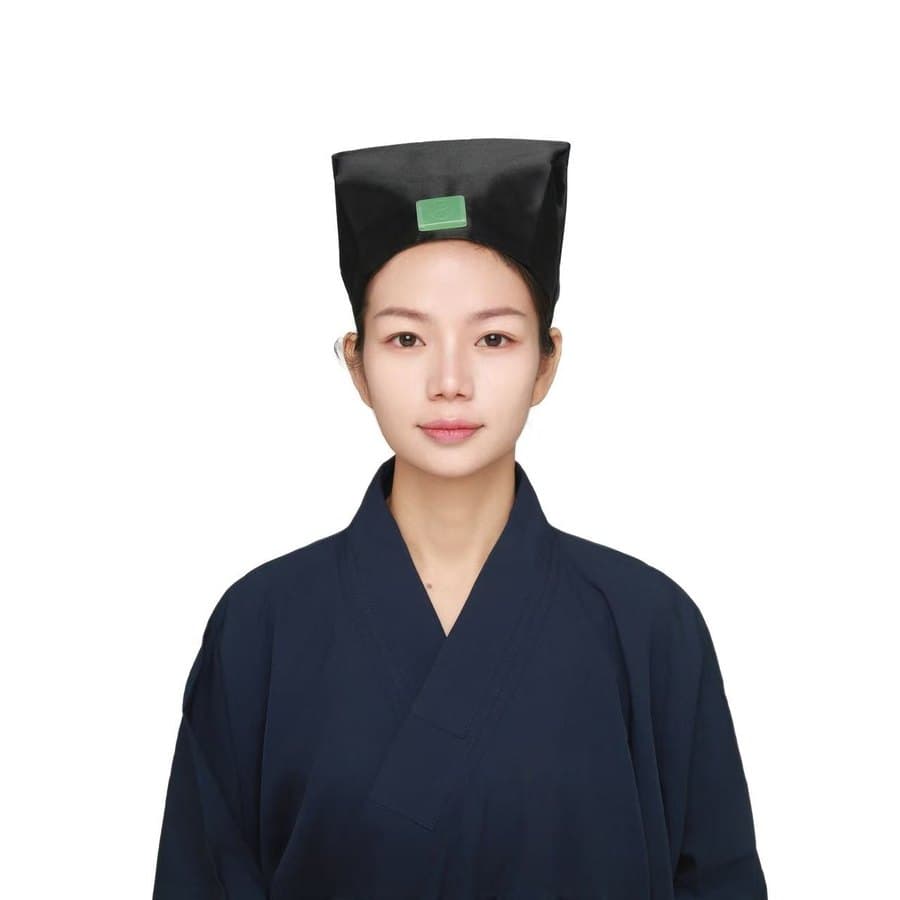
Master Zhi Ning (Taoist name; birth name — Yu Xi)
Who she is
A bearer of a living transmission
In the Taoist tradition, knowledge is passed personally — master to student, across generations. The master's credentials are not titles for a business card but recorded lines of transmission, each of which can be named.
- The Shangqing (Maoshan) tradition
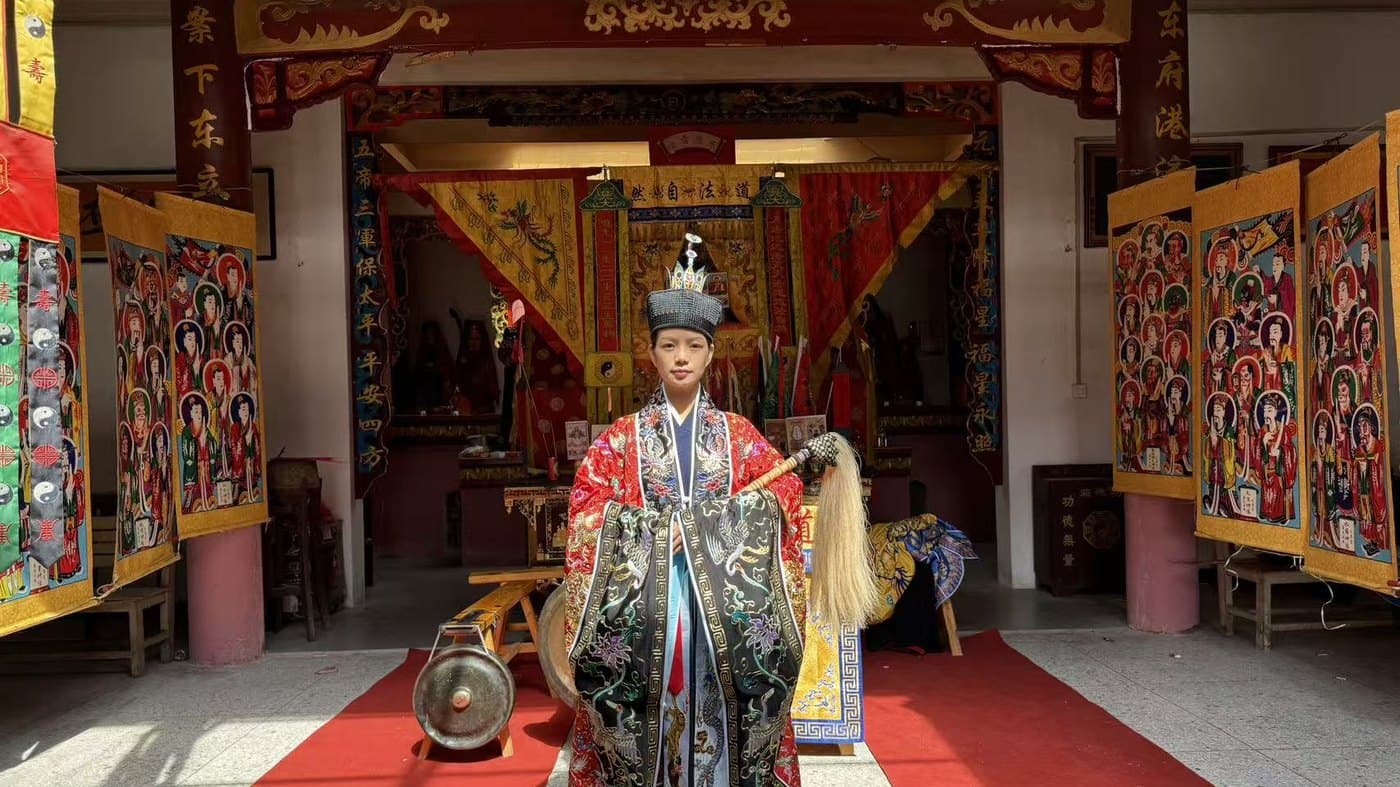
Bearer of the Shangqing transmission of Mount Maoshan — one of China's oldest Taoist traditions — in the 80th generation.
- The Zhengyi Qingwei tradition
Initiated into the Zhengyi Qingwei line in the 13th generation; a bearer of this school's ritual 'thunder practices' tradition.
- The school of physician Li Ke — third generation
Successor, in the third generation, of the academic school of Li Ke (1930–2013) — one of the most renowned TCM physicians of modern China.
- The jingfang tradition
Classical formulas of the Han era: at the core is the 'Shang Han Lun' of Zhang Zhongjing — the physician China calls the 'sage of medicine'.
About the field
What Taoist medicine is
Briefly, where this method comes from and why it is considered the deepest branch of the Chinese tradition.
The Taoist tradition is the elder root of Chinese medicine. The concepts of qi, the balance of yin and yang, the unity of body and spirit came into TCM from Taoism, and for centuries Taoist masters were also physicians. 'Taoist medicine' is not a separate exotic practice but the deepest, earliest branch of the same system.
Its medical core is the jingfang school — 'classical formulas': prescriptions from the treatises of the Han era, roughly two thousand years old. Chief among them is the 'Shang Han Lun' ('Treatise on Cold Damage') of Zhang Zhongjing. It is a strict, conservative school: the formulas have been refined over centuries and are not 'improved' to follow fashion.
The line Master Zhi Ning belongs to is the school of Li Ke. Li Ke (1930–2013) was a famed physician from Shanxi province, renowned in China for applying classical decoctions in the most severe conditions — in hospital settings, alongside intensive-care medicine. His academic school is one of the most respected living jingfang lines; Zhi Ning is its successor in the third generation.
The second part of the prescriptions is properly Taoist: restorative practices. Meditation, breathing and gentle movement practices, dietetics, daily regimen — a system the Taoist tradition has polished for centuries. For the patient this is not a religious rite but practical instruments of recovery; the consultation involves no religious obligations.
Process
How a consultation goes
- 1Conversation and pulse diagnosis
An unhurried consultation by the classical method: pulse, tongue, a detailed conversation about your state and way of life.
- 2Review of your records
The master studies your records and current prescriptions — translated by us in advance. Nothing in your treatment is cancelled.
- 3An individual programme
Classical formulas, restorative practices, dietetics and regimen — composed for your picture.
- 4Follow-up
Prescriptions adjusted to your dynamics; contact through your coordinator — including after you return home.
The consultation is unhurried: classical diagnosis takes time and attention. All communication runs in your language, with an interpreter; you receive the prescriptions in writing.
What people come with
What people bring to the master most often
These are the situations the school is approached with — not a promise of cure. Programmes are built alongside your main treatment and do not replace it; relevance in your case is determined individually. In acute conditions — emergency care only.
- A complex cardiac history
Past heart failure, stroke, severe asthma — supportive programmes alongside your main treatment and follow-up.
- Chronic autoimmune conditions
Rheumatoid arthritis, scleroderma, systemic lupus — as complementary support on top of base therapy.
- Persistent insomnia and depletion
Years of poor sleep, constant chilliness, loss of strength — what the tradition describes as deep yang deficiency.
- Chronic digestive disorders
Long-standing diarrhoea, a sensitive digestive tract, intolerance of cold food.
- Women's health
Difficulty conceiving, postpartum recovery, 'cold' in the lower abdomen in the traditional picture — discreetly and individually.
- Recovery after chemo- and radiotherapy
Gentle support of strength and appetite in the recovery period — strictly in agreement with your oncologist.
The moment
Why this is a rare opportunity
Bearers of a living Taoist transmission with a classical medical school are few even in China — and they are almost never within an international patient's reach: without the language, the connections and the knowledge of where to go, this door simply does not open. Here it is open: the master consults at Yuchan Palace on Wenbi Mountain and, by separate arrangement, can come to the cluster or wherever suits you; and all communication runs through your coordinator — in your language.
Ask about upcoming availability
The master sees a limited number of patients, by prior arrangement. Write to a coordinator — we will tell you about the formats, timing and documents worth preparing.
Questions
Frequently asked questions
No. The consultation is a medical conversation and restorative prescriptions: formulas, practices, dietetics. The Taoist school is the source of the method and of the master's training — not a rite for the patient. No religious obligations are involved.
Yes — provided the master sees the full picture. We pass on your records and medication list in advance; prescriptions are built as a complement, and nothing in your treatment is cancelled. Decisions on base therapy remain with your treating physician.
No. The school's historic reputation comes from work in Chinese hospitals, alongside intensive-care medicine. We arrange planned, supportive formats only. In acute conditions, seek emergency care — that is the only right route.
With an interpreter: the whole conversation runs in your language, and you receive the prescriptions in writing.
Through a coordinator, by prior arrangement: the master sees a limited number of patients. Write to us — we will tell you about upcoming availability and the documents worth preparing.
Discuss the format with a coordinator
Tell us about your situation — we will advise whether this format is relevant and help prepare the documents for review.