
Journal
LaViv: rejuvenation with your own cells — what the technology is
LaViv works not with “foreign” substances but with your own skin cells. We explain what the technology is, how it differs from fillers and Botox, and who it's considered for.
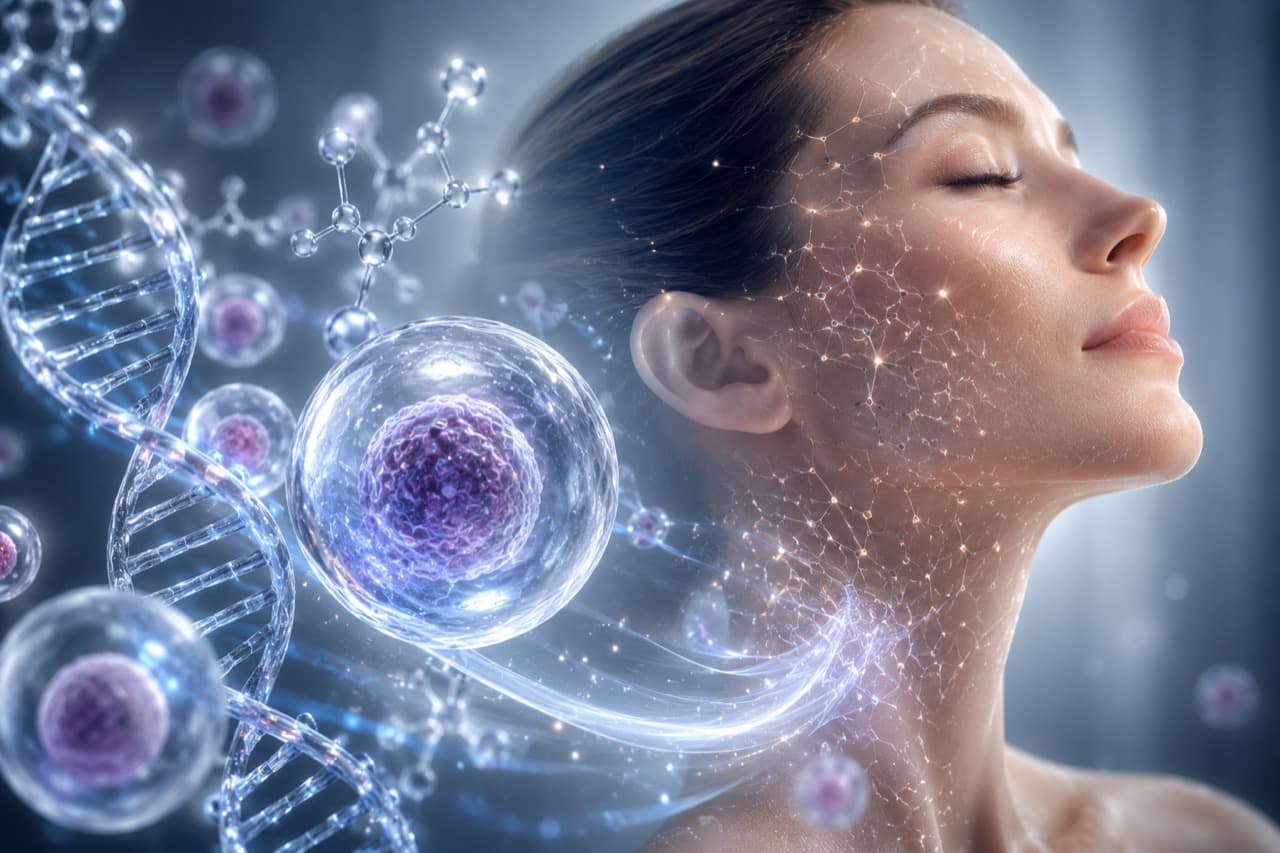
Age shows in the skin: tone, firmness, freshness. Skincare works “from the outside,” but you want an approach that engages the skin's own resource — without fillers or foreign substances.
One such approach is LaViv. It's not plastic surgery and not “guaranteed rejuvenation”: the programme's composition and realistic expectations are set by a physician.
Why skin loses firmness
Firmness is held by fibroblasts — cells in the dermis that produce collagen, elastin and hyaluronic acid, the very “scaffold” of young skin. With age there are fewer of them, and the skin loses its support.
LaViv's logic is to bring the work back to these cells themselves, rather than fill volume from the outside.
What LaViv does
From a small skin sample behind the ear, the best fibroblasts are selected in the lab and your own cells are expanded (within three “generations”), then returned to the skin. Your own living cells do the work — so the effect comes gradually and lasts longer than fillers.
LaViv is an FDA-approved autologous-fibroblast technology; its scientific board includes researchers from MIT and UCLA. More on the anti-age programme page.
How it differs from fillers and Botox
Fillers add volume from the outside; Botox relaxes muscles. LaViv adds no foreign substances and doesn't change your expression — it works on the quality of the skin itself, with your own cells. So the result is different in character: not instant “volume” but a gradual improvement.
Who it's for and where to start
The method is more often considered when:
- You want a natural result on your own cells, without fillers or Botox
- Tone, firmness and freshness aren't what you're used to
- There's post-acne or scar changes of the skin
- You value acting early, to an individual plan
Questions
Frequently asked questions
The sample is taken under local anaesthesia (30–40 minutes); the incision is usually hidden under the hair behind the ear. Healing is individual.
Not immediately, unlike fillers: changes develop over weeks and months. The result is individual and not guaranteed.
Not “better in general” — it's a different approach: your own cells and work on skin quality, without foreign substances and without changing your expression. What suits you is determined by a physician.
Read next
Useful on this topic
Discuss your situation with a coordinator
Describe your medical goal — we'll advise which documents are needed for a preliminary assessment and what the next steps could be.