
Rheumatology · Boao Lecheng cluster
Rheumatoid arthritis treatment in China, on Hainan
Morning stiffness that lasts more than an hour, and a regimen that used to hold has stopped holding. In the Boao Lecheng cluster, four days cover what takes six months and three different clinics at home: inflammation, lungs, liver, kidneys, the whole treatment history — and a hospital report you can hand to your own rheumatologist. The first step is free and requires no travel: Dr Yang reads your records himself and tells you within 1–2 working days whether flying makes sense. If it does not, he says so.
About the condition
What you get before you spend anything
A free answer to four questions. Whether your records support the diagnosis. Whether your methotrexate dose and the timing of the response assessment are adequate. What is available to you at home that has not been tried yet. Whether flying makes sense at all — and if it does not, that is what the answer will say. You can send your records as phone photos; the simplest route is straight to WhatsApp.
Why it is worth finding out now. In rheumatoid arthritis, time works against the joint: the first months after diagnosis, and the period when a regimen stops controlling activity, are not recoverable later. The review costs nothing, and you have to gather the documents anyway.
Why people come
The situations we see most often
If one of these is yours, it is worth establishing the stage and the options.
- You were diagnosed recently
Methotrexate has been started, but nobody is scoring disease activity. There is no way to tell whether the regimen is working, or whether you are losing the early months when remission is easiest to reach.
- Two drugs have already failed
The first biologic stopped working, the second one with a different mechanism did too, and activity persists. What comes next is not guesswork: it starts with re-examining the diagnosis itself.
- The drugs are hard to tolerate
Nausea after methotrexate, rising liver enzymes, frequent infections on a biologic. Or breathlessness, a dry cough or dry eyes have appeared — in which case the hands are not the only thing to look at.
- The joints have started to change
Erosions or joint space narrowing on imaging, fingers drifting sideways — and you want to know what can still be done while function is intact.
Standard care first
What is normally done before anything else
We do not propose replacing proven treatment. On the contrary: without it, any next step loses its meaning.
Care starts with standard therapy, and most of the time the question is settled at that level. Here is what should have been done at home:
- Methotrexate is first line. Guidelines put the target dose at 15–25 mg once weekly, strictly once a week and with folic acid; whether that dose suits you is your rheumatologist's decision. Years on 7.5 mg without remission is a reason to have that conversation.
- Glucocorticoids are a bridge only at the start of therapy, tapered and stopped, ideally within three months. Long-term use is a reason to revisit the regimen and to calculate fracture risk.
- Biologic therapy is added to methotrexate if the target is not reached within 3–6 months. In most countries these drugs are licensed and funded through national or insurance schemes, usually with a specialist approval step. That is where to start — not with a flight.
- JAK inhibitors are a separate decision. They are considered after cardiovascular, malignancy and thrombosis risks have been weighed: age over 65, smoking and a history of clots all change the answer. Screening for tuberculosis and hepatitis is mandatory before any biologic or targeted drug.
- Score activity, not impressions — DAS28, CDAI or SDAI on a schedule; if the target is missed at 3–6 months, the regimen changes rather than waits. Cardiovascular risk is calculated separately: in this disease, vascular events shape the prognosis more often than the joints do.
And separately: when you need a doctor today, not a trip. Fever or chills while on methotrexate, a biologic or a targeted drug. A joint that has suddenly become hot and severely painful. New breathlessness or a dry cough. Neck pain with numbness in the arms and a changed gait: atlantoaxial subluxation must be excluded before a long flight and before any general anaesthetic. None of this is solved by flying — the detail is in the full account.
Where a programme begins
No programme starts without a work-up
Diagnostics come first: they decide whether the method is indicated in your case and to what extent. From here there are two possible next steps.
The regenerative approach
What the cluster additionally considers
On medical grounds — as an addition to standard care, never instead of it.
- The diagnosis first, any method second
The cluster physician goes through the whole history: which drugs, at which doses, for how many months, how activity was measured, what was stopped and why. When two drugs with different mechanisms have failed to control the disease, the first step is not a new method but a re-check of the diagnosis: psoriatic arthritis and calcium pyrophosphate deposition disease can look much the same, and persistent pain with suppressed inflammation often turns out to be fibromyalgia. Quite often the question is settled right here — that is a result of the trip, not a failure of it.
- What a single visit actually covers
The backbone is the comprehensive check-up: four days in one building cover what takes months at home. What to add on the rheumatology side, and which specialist you actually need, is decided from your records before departure; anything beyond the programme is paid separately, and you receive the list with indicative prices in advance. The report is written by the hospital, and we translate it for you. An interpreter works at the consultations, and a coordinator is with you between them.
- What the cellular side does and does not offer
There is an entry for rheumatoid arthritis on the zone's list: umbilical cord mesenchymal cell therapy was included in the fourth batch of technologies permitted for clinical application, and a dedicated centre opened in 2026. And immediately the limit: neither European nor American guidelines include cell therapy in the treatment algorithm, no cell product anywhere in the world is registered for the indication rheumatoid arthritis, and experience with this particular diagnosis in the zone is scarce — we are talking about the first cases. The list changes: we verify the entry on the date you contact us, before anyone buys a ticket.
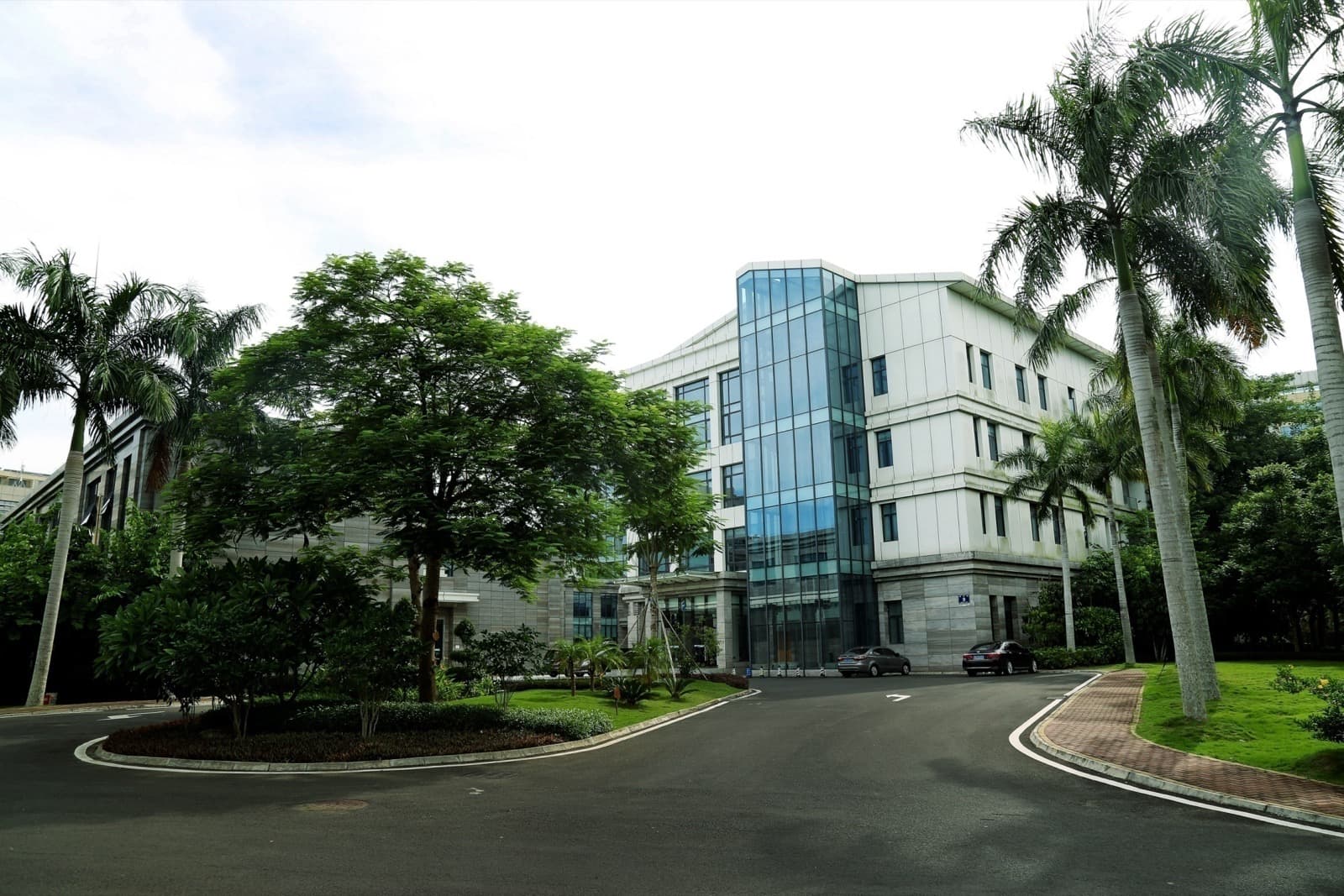
Methods
Which directions may be considered
What suits your case is determined by a physician after diagnostics.
Comprehensive check-up
Around 150 parameters: extended laboratory work, inflammatory markers, high-resolution chest CT, liver and kidneys, hepatitis, HIV and syphilis screening, ECG and ultrasound. The first in-person step, before any treatment decision.
Cellular technologies in the cluster
How this works inside the zone: where the cells come from, how they are prepared, under which legal framework they are used. That page is written about joints and tissue — in rheumatoid arthritis the evidence is different, and it is set out in the full account.
Traditional Chinese medicine
Acupuncture and herbal regimens help some people with pain and sleep, and such a course can be arranged in the cluster. The limit is plain: there is no convincing evidence of any effect on CRP, erosions or prognosis, and it does not replace disease-modifying therapy.
Second opinion on your records
The free review answers one question: whether flying makes sense. A second opinion is a detailed written document on the diagnosis and the regimen for your own doctor; it is a paid service and not everyone needs it.
Plainly about the limits
When the regenerative route is not for you
This matters more than any marketing: knowing in advance when the method is not considered.
There are situations in which our answer is: do not travel. For this diagnosis, these are the main ones:
- Disease-modifying therapy has not really been tried — starting with cells before methotrexate and a biologic have been used at adequate doses and for an adequate time means spending the window of opportunity.
- You are hoping to come off your drugs — the programme does not set that goal. Tapering during sustained remission is planned by your rheumatologist; stopping on your own almost always ends in a flare.
- Active infection, cancer or pregnancy — tuberculosis and hepatitis are found often after years of immunosuppression; with active cancer or a planned pregnancy the programme is postponed. That is the physician's call, not ours.
- The joint is already destroyed — with established deformity and lost function, the answer lies with an orthopaedic surgeon. Cells do not restore joint geometry, and promising otherwise would be dishonest.
If your own rheumatologist is against the trip right now, that carries weight: they can see the trajectory, which the cluster physician cannot. And do the sums in advance: no public health system covers the trip, the treatment, or the treatment of complications once you are home; private policies usually do not either, so check yours. We do not sell a method — we arrange access to a physician's decision. Send your records for review
How it works
From your records to coming home
- 11. The physician's answer first, tickets after
The remote review comes first, and only then the packing. No visa is needed for this trip: Hainan's own visa-free regime covers stays of up to 30 days and names medical treatment explicitly as a permitted purpose — all it requires is a direct flight to the island.
- 22. Packing and the journey
Bring your drugs with prescriptions and translated names: trade names in China are different, and a biologic travels in the cold chain, in hand luggage, with a letter from your doctor in English. A rule for the whole trip: tell any doctor about methotrexate first, before you describe your symptoms — the combination with co-trimoxazole is dangerous. Direct flights land in Sanya, followed by a ground transfer along the eastern coast to the cluster in Qionghai; a coordinator meets you.
- 33. Assessment and the physician's decision
A few days in one place instead of months of appointments. A common fear is getting worse while you are there. You are inside a medical cluster: the hospitals are next to one another, the coordinator is reachable, and if you deteriorate you are seen on the spot the same day. If there is no indication for additional treatment, you hear that straight away: a no here is as much a result of the physician's work as a yes.
- 44. Going home and follow-up
You leave with a translated hospital report and a monitoring schedule: DAS28, CRP and review at 3, 6 and 12 months. Emergency care cannot be provided remotely, complications are managed by doctors where you live, and contact with your coordinator remains. Hainan is the tropics: if you develop a fever after returning, tell your doctor about the trip and about your disease-modifying therapy.
Why here
What the Boao Lecheng cluster offers
- Dr Yang reads your records himself
A partner physician of the cluster who trained in medicine in Russia. Russian-language records are read in the original, with no translation needed: in autoimmune disease the meaning sits in the doses and in the reasons a drug was stopped.
- We check the current permitted list
Cellular technologies are permitted in the zone one by one: the hospital, the indication and the price are published by the regulator, and the list changes. We verify the entry for your diagnosis on the date you contact us — before any ticket is bought.
- You pay the hospital directly
There is no mark-up on the medicine. We earn on the organising: translating documents, building the route, accompanying you — that is our work, and it is paid for separately.
- We are not a clinic and we do not treat
Treatment is delivered by licensed hospitals of the cluster — they hold the licences and the responsibility. Boao Lecheng is a pilot zone where technologies unregistered in the rest of China are legally available.
Common questions
The essentials
Send your scans — and get a straight answer
A specialist physician in the cluster will look at your stage and say whether the regenerative route is worth considering. The review is free; we do not diagnose online.