
Spine · orthopaedics and TCM
Treatment for a herniated disc in China (Boao Lecheng)
Most disc herniations shrink over time, and surgery is far from necessary for everyone. But there are states where waiting is dangerous. In the Boao Lecheng cluster it starts with precise diagnostics, and then combines conservative care, Traditional Chinese Medicine and — by indication — regenerative methods.
About the condition
What a herniated disc is and where the pain comes from
An intervertebral disc consists of a tough fibrous ring with a gel-like nucleus inside. When the ring tears, part of the nucleus bulges outward — that is a herniation. Pain arises both from mechanical pressure on the nerve root and from inflammation around it.
One fact is rarely explained: a substantial share of herniations shrink on their own over months, as the body gradually resorbs the displaced fragment. That is precisely why, in the absence of red flags, treatment starts conservatively.
And the reverse: the size of a herniation on MRI correlates poorly with the severity of pain. Large herniations can be almost symptom-free, and small ones can hurt badly. The person and their symptoms are treated — not the image.
Why people come
The situations we see most often
If one of these is yours, it is worth establishing the stage and the options.
- Pain radiating to the leg or arm
Shooting pain along the nerve — into the buttock, down the back of the thigh, to the foot.
- Pain that has lasted months
Flare-ups keep returning, and it never fully settles in between.
- Blocks wear off quickly
Injections do help, but the relief gets shorter each time.
- Surgery proposed, and you have doubts
You want a calm second opinion on your scans, without pressure.
- Desk work and recurrences
Your back “goes” regularly and you want to build a system at last.
- You want the non-surgical route
You want to understand what can realistically be done before an operation.
Standard care first
What is normally done before anything else
We do not propose replacing proven treatment. On the contrary: without it, any next step loses its meaning.
In the absence of red flags this is exactly where treatment starts — and in most cases it is enough:
- Staying active — prolonged bed rest worsens the outcome rather than helping
- Exercise therapy and core work under a specialist's guidance
- Pain relief — in courses, as prescribed
- Nerve-root blocks — for a marked radicular syndrome, by indication
- Adjusting load and workplace ergonomics
- Surgery — for a persistent severe syndrome or a neurological deficit
Time is on your side more often than people assume: a notable share of herniations shrink within 6–12 months. The task is to get through that period safely without missing the indications for surgery.
Where a programme begins
No programme starts without a work-up
Diagnostics come first: they decide whether the method is indicated in your case and to what extent. From here there are two possible next steps.
The regenerative approach
What the cluster additionally considers
On medical grounds — as an addition to standard care, never instead of it.
- First, identify the source of pain
MRI and specialist examination: it matters whether the pain comes from the nerve root, the facet joints or muscular tension. The whole tactic follows from that.
- Traditional Chinese Medicine
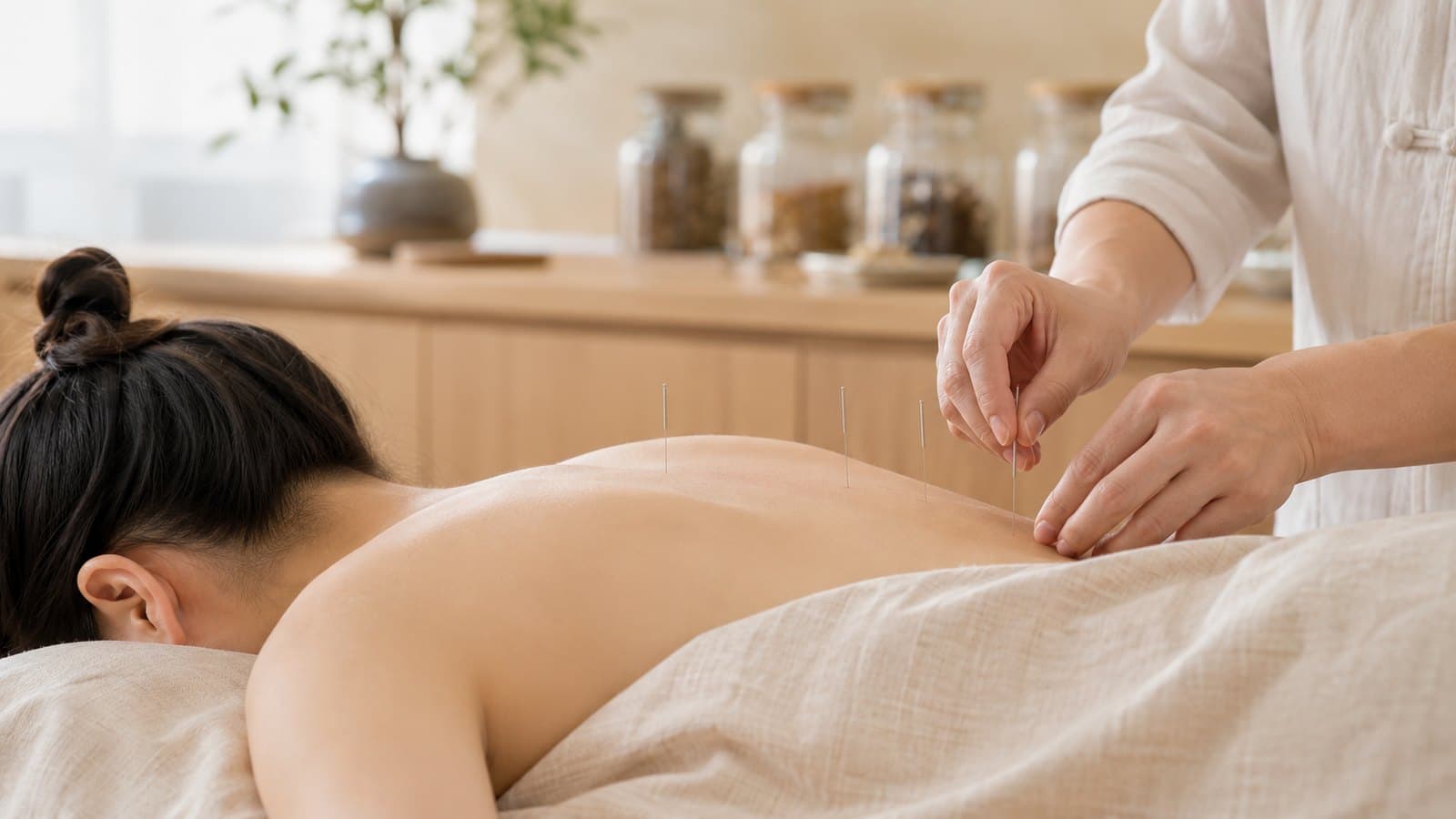
Acupuncture, tuina and herbal medicine — an officially licensed branch of Chinese healthcare. For chronic back pain it is used by indication, alongside the cluster's modern diagnostics.
- Regenerative methods by indication
PRP and cellular programmes are considered where there are accompanying degenerative changes. This is an addition, not an alternative to surgery where surgery is indicated.
- Rehabilitation as the foundation
Without restoring the muscular corset, any method gives only short-lived relief. The programme is therefore built around regular work, not a one-off procedure.
Methods
Which directions may be considered
What suits your case is determined by a physician after diagnostics.
Traditional Chinese Medicine
Acupuncture, tuina and herbal medicine — by indication, with diagnostics and interpreting.
Peptide therapy and PRP
Growth factors from your own plasma — a regenerative tool for degenerative change.
Orthopaedics and spine
Precise spinal diagnostics, a second opinion and modern treatment.
Plainly about the limits
When the regenerative route is not for you
This matters more than any marketing: knowing in advance when the method is not considered.
There are signs where you must not wait or plan a trip — urgent local care is needed:
- Disturbed bladder or bowel control, numbness in the saddle area — this is an emergency
- Increasing weakness in the leg or foot — for example, a dropped foot
- A progressing neurological deficit — symptoms worsening day by day
- Pain after significant trauma, with a cancer history, or with a high fever
- Expecting needles to “remove” the herniation — that is not how it works
In these cases the answer is not a trip but urgent local medical care. An organised programme makes sense once the condition is stable and there is time for a calm assessment.
How it works
From your records to coming home
- 11. Records and MRI
You send your scans and records. We translate them and pass them to a specialist physician in the cluster.
- 22. Preliminary assessment
The physician reviews the picture and history and says which route makes sense. No diagnosis is made online.
- 33. Diagnostics on site
Examination, further tests where needed, and assessment of contraindications to procedures.
- 44. The programme
The plan may combine TCM, rehabilitation and — by indication — regenerative methods. The physician decides.
- 55. Going home, with a regimen
You leave with an exercise programme and guidance on load; we stay in touch.
Why here
What the Boao Lecheng cluster offers
- Two approaches in one place
Modern diagnostics and Traditional Chinese Medicine are available here at once — and can be combined deliberately.
- Licensed TCM
This is an official branch of Chinese healthcare with qualified physicians, not folk practice.
- A state-run zone
Boao Lecheng is a pilot medical zone under state supervision, with a special regulatory regime.
- Support and interpreting
A personal coordinator runs the whole route: documents, clinic, interpreting and logistics.
Common questions
The essentials
Send your scans — and get a straight answer
A specialist physician in the cluster will look at your stage and say whether the regenerative route is worth considering. The review is free; we do not diagnose online.