
Spine · TCM and rehabilitation
Neck pain and degenerative neck changes: treatment in China (Boao Lecheng)
Degenerative changes show up on scans in almost everyone past forty — and they often do not explain the pain. So this starts not with procedures but with identifying the source of the symptom. From there the cluster combines rehabilitation and Traditional Chinese Medicine — and where there are red flags, we say plainly that you need urgent local care.
About the condition
What happens in the cervical spine
Degenerative changes of the cervical spine are often treated as an explanation for almost any neck pain. In practice the distinction matters: such changes appear on MRI in most people over forty and frequently have no relation to the pain.
So what is treated is the symptom and its source, not the image. A scan finding on its own does not set the treatment.
Most neck pain is non-specific — related to muscles, posture and overload — and responds well to work with load. Less often the pain is radicular: it radiates into the arm, comes with numbness, and calls for a different approach.
Why people come
The situations we see most often
If one of these is yours, it is worth establishing the stage and the options.
- A stiff, painful neck
Stiffness and pain build up towards the end of the working day.
- Tension headaches
Pain rises from the neck to the back of the head and temples.
- Shooting pain into the arm
Pain radiates to the shoulder or arm, sometimes with numb fingers.
- Desk work
Long hours at a screen, and flare-ups keep coming back.
- “Changes found on the scan”
An MRI described changes and now it is unclear what to do about it.
- You want a systematic answer
One-off procedures help briefly; you want a clear plan.
Standard care first
What is normally done before anything else
We do not propose replacing proven treatment. On the contrary: without it, any next step loses its meaning.
In the absence of red flags, the proven approach looks unremarkable — and it works:
- Staying active — rest and a prolonged collar make things worse, not better
- Exercises for the deep neck flexors and the scapular muscles — the main working tool
- Ergonomics — screen height, arm support, breaks in work
- A short course of pain relief — as prescribed
- Manual and physiotherapy methods — by indication, as an addition to exercise
Most episodes of neck pain resolve. The task is to get through the acute phase, restore function, and avoid overdoing investigations and interventions.
Where a programme begins
No programme starts without a work-up
Diagnostics come first: they decide whether the method is indicated in your case and to what extent. From here there are two possible next steps.
The regenerative approach
What the cluster additionally considers
On medical grounds — as an addition to standard care, never instead of it.
- First, the source of pain
Examination and, where needed, imaging: it matters whether the pain is muscular, facet-joint or radicular. Everything follows from that.
- Traditional Chinese Medicine
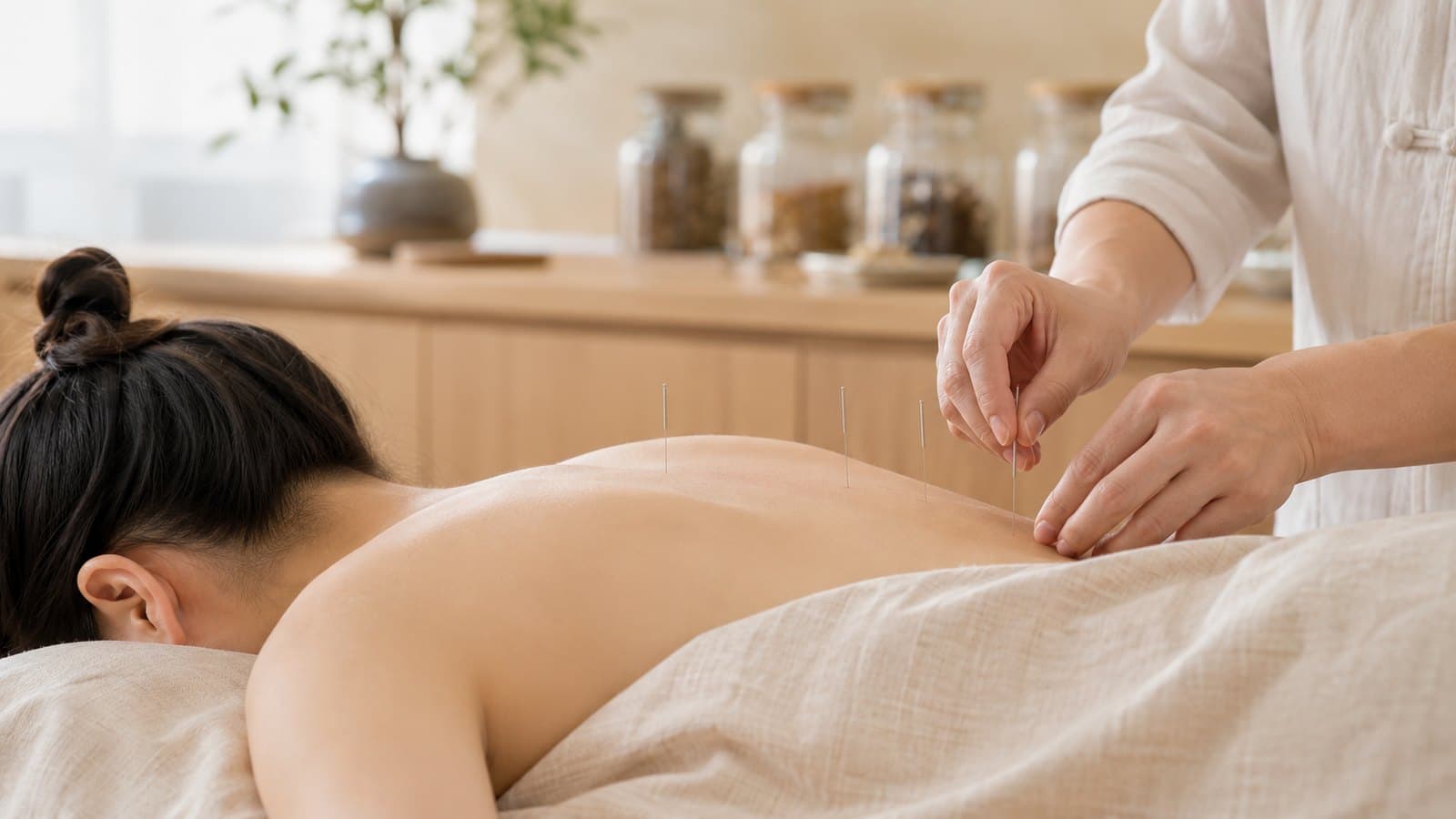
Acupuncture and tuina are used for chronic neck pain by indication — as part of a combined programme, alongside the cluster's modern diagnostics.
- Rehabilitation as the foundation
The exercise programme is what holds the result. Without it, the effect of any procedure will be short.
- Regenerative methods — rarely, by indication
With accompanying degenerative change a physician may consider PRP. It is an addition, not the main route for neck pain.
Methods
Which directions may be considered
What suits your case is determined by a physician after diagnostics.
Plainly about the limits
When the regenerative route is not for you
This matters more than any marketing: knowing in advance when the method is not considered.
There are signs where a trip is not planned — urgent local care is needed:
- Weakness in the arm or hand, increasing numbness
- Disturbed gait and coordination, problems with fine motor control — myelopathy is possible
- Disturbed bladder control — this is an emergency
- Pain after trauma, with a cancer history, with fever or weight loss
- Expecting vertebrae to be “put back” once and for all — that is not how it works
With these signs you need a doctor locally, and quickly. A programme in the cluster makes sense once the condition is stable and the issue is chronic pain.
How it works
From your records to coming home
- 11. Records and scans
You send a description of your symptoms, MRI and records. We translate them for the cluster's physicians.
- 22. Preliminary assessment
The physician says what most likely drives the pain and which route makes sense. No diagnosis online.
- 33. Examination on site
Assessment of mobility, neurological status and contraindications to procedures.
- 44. The programme
Usually a course: rehabilitation plus TCM by indication. One-off procedures give short-lived relief.
- 55. A programme for home
You leave with exercises and ergonomic guidance — the key to holding the result.
Why here
What the Boao Lecheng cluster offers
- Two approaches at once
Modern diagnostics and licensed TCM are available in one place and can be combined deliberately.
- A course, not a single visit
The trip format allows a full course back to back, which matters most for chronic pain.
- A calm environment
A change of setting and an unhurried routine help break the pain–tension–pain cycle.
- Support and interpreting
A coordinator runs the whole route: documents, clinic, interpreting and logistics.
Common questions
The essentials
Send your scans — and get a straight answer
A specialist physician in the cluster will look at your stage and say whether the regenerative route is worth considering. The review is free; we do not diagnose online.